Brain Aneurysm
A brain aneurysm is a weakened, bulging area in the wall of an artery in the brain. Most aneurysms are small and cause no symptoms, but if they rupture, they cause a life-threatening type of stroke called a subarachnoid haemorrhage requiring emergency treatment.

Symptoms
- Most unruptured aneurysms cause no symptoms and are found incidentally on imaging.
- Large unruptured aneurysms may cause headache, visual disturbance, or cranial nerve problems.
- Ruptured aneurysm: sudden, severe "thunderclap" headache (often described as the worst headache of your life).
- Nausea, vomiting, neck stiffness, and sensitivity to light with rupture.
- Loss of consciousness, seizures, or neurological deficit with severe rupture.
 Clinical anatomical model showing affected spinal structures (no text).
 Causes and risk factors
- Weakness in the artery wall, which may be congenital or acquired.
- High blood pressure (hypertension).
- Smoking, which significantly increases the risk of aneurysm formation and rupture.
- Family history of brain aneurysms.
- Connective tissue disorders such as Ehlers-Danlos syndrome or polycystic kidney disease.
- Age: most commonly diagnosed between 40 and 60 years.
How diagnosis is made
- CT angiography (CTA) to visualise the aneurysm and surrounding blood vessels.
- MRI and MR angiography (MRA) for screening and follow-up of unruptured aneurysms.
- Catheter angiography (digital subtraction angiography) for detailed anatomical assessment.
- CT scan to detect subarachnoid haemorrhage if rupture is suspected.
- Lumbar puncture if the CT is negative but rupture is still clinically suspected.
 Typical diagnostic grey-scale imaging scan (MRI/CT).
 Non-surgical treatment options
- Observation with serial imaging for small, incidental, low-risk aneurysms.
- Blood pressure management to reduce the risk of growth or rupture.
- Smoking cessation.
- Risk factor modification and regular follow-up imaging.
- Discussion of individual rupture risk versus treatment risk to guide management.
When surgery may be considered
Treatment is recommended for aneurysms at higher risk of rupture (based on size, location, morphology, and patient factors), for symptomatic aneurysms, and urgently for ruptured aneurysms. Treatment options include surgical clipping or endovascular coiling.
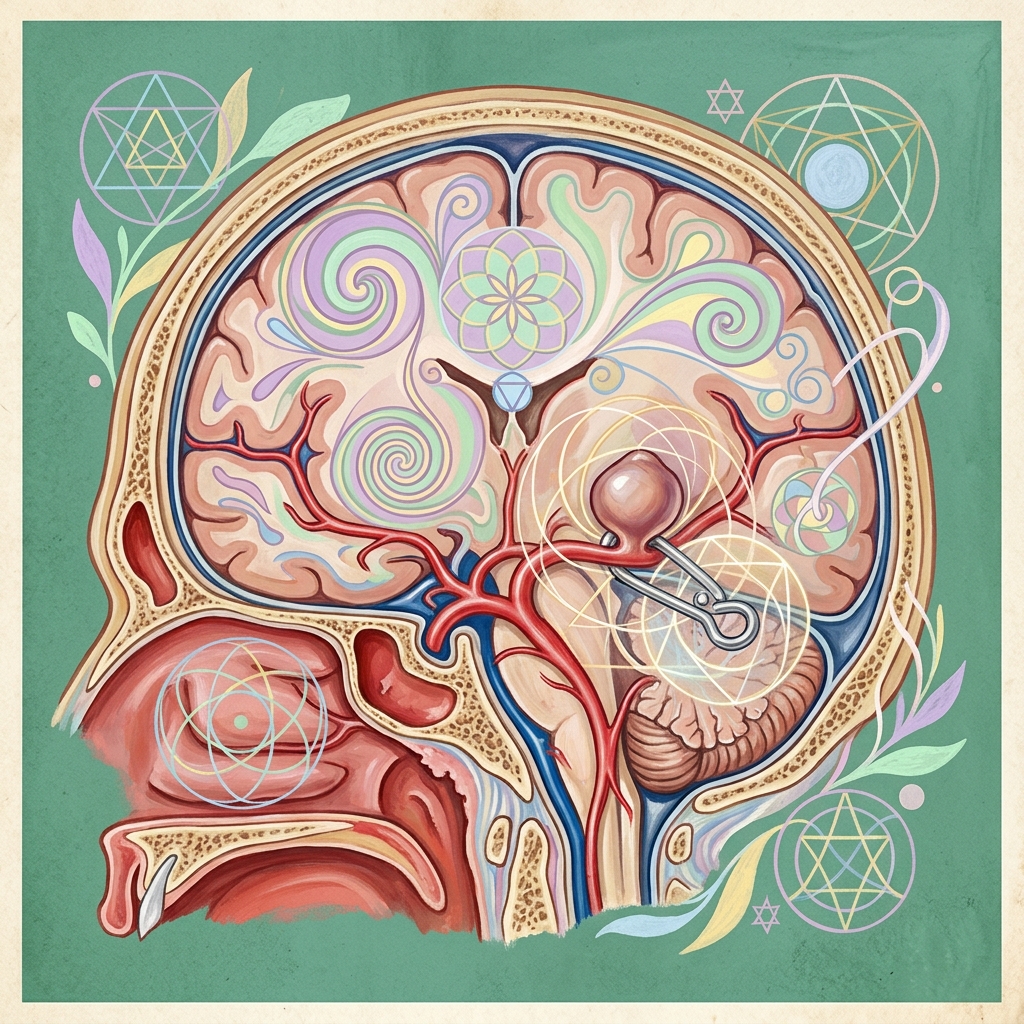 Advanced surgical technology and precision instrumentation.
 Expected outcomes
Treatment of unruptured aneurysms carries low risk and effectively eliminates the rupture risk. Outcomes after ruptured aneurysm depend on the severity of the initial haemorrhage and the speed of treatment. Modern treatment has significantly improved survival and recovery rates.
 Rehabilitation pathways and safe movement restoration.
 Frequently asked questions
Can a brain aneurysm be detected before it ruptures?
Yes. Brain aneurysms are often found incidentally during imaging for other conditions. Screening may be recommended for people with a family history of aneurysms or known risk factors.
Does every brain aneurysm need treatment?
No. Many small aneurysms have a very low risk of rupture and can be safely monitored with periodic imaging. The decision to treat depends on size, location, shape, and individual patient factors.