Drug-Resistant Epilepsy
Drug-resistant (refractory) epilepsy is defined as the failure to achieve sustained seizure freedom with adequate trials of two or more appropriately chosen anti-seizure medications. Approximately one-third of people with epilepsy develop drug resistance. Surgical evaluation should be considered early, as epilepsy surgery can be life-changing for suitable candidates.

Symptoms
- Recurrent seizures despite adequate anti-seizure medication trials.
- Focal seizures with or without impairment of awareness (previously called partial seizures).
- Generalised tonic-clonic seizures that are not controlled by medication.
- Seizure-related injuries, cognitive decline, or psychosocial impairment.
- Status epilepticus (prolonged seizures) requiring emergency treatment.
- Significant medication side effects without adequate seizure control.
 Clinical anatomical model showing affected spinal structures (no text).
 Causes and risk factors
- Structural brain lesions: cortical dysplasia, mesial temporal sclerosis, cavernomas, low-grade tumours, previous stroke, or traumatic brain injury.
- Genetic epilepsy syndromes with a pharmacoresistant phenotype.
- Unknown cause in some cases (cryptogenic epilepsy), though advanced MRI may reveal subtle structural abnormalities.
- Dual pathology: combination of hippocampal sclerosis with an additional structural lesion.
How diagnosis is made
- Prolonged video-EEG monitoring to capture and localise seizures.
- High-resolution 3T MRI with an epilepsy-specific protocol to identify structural lesions.
- PET (positron emission tomography) scan to identify areas of reduced brain metabolism corresponding to the seizure focus.
- Neuropsychological assessment to map cognitive function and lateralise language and memory.
- Invasive EEG monitoring (stereo-EEG or subdural electrodes) when non-invasive studies are inconclusive.
- Functional MRI (fMRI) and Wada testing for language and memory lateralisation.
 Typical diagnostic grey-scale imaging scan (MRI/CT).
 Non-surgical treatment options
- Optimisation of anti-seizure medication regimen, including newer agents.
- Vagus nerve stimulation (VNS) as an adjunctive therapy for patients who are not surgical candidates.
- Dietary therapies such as the ketogenic diet, particularly in paediatric epilepsy.
- Responsive neurostimulation (RNS) for focal epilepsy not amenable to resection.
- Psychological support for the impact of chronic epilepsy on quality of life.
When surgery may be considered
Epilepsy surgery is considered when seizures are not controlled by at least two appropriate anti-seizure medications and a surgically treatable cause can be identified. Early surgical referral is important because prolonged uncontrolled epilepsy is associated with cognitive decline, psychosocial disability, and risk of sudden unexpected death in epilepsy (SUDEP).
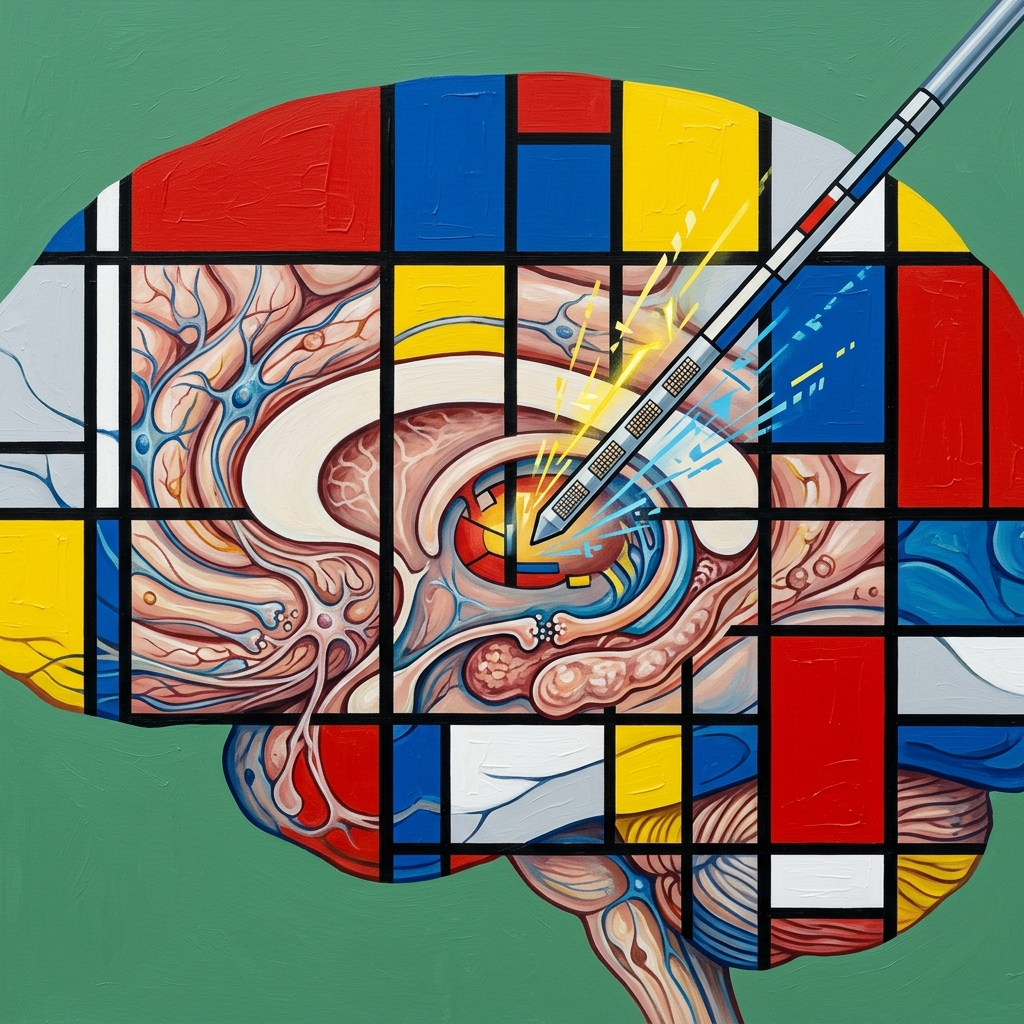 Advanced surgical technology and precision instrumentation.
 Expected outcomes
Temporal lobe epilepsy surgery achieves seizure freedom in 60% to 80% of carefully selected patients. Lesional epilepsy surgery (removing a visible structural cause) has even higher success rates. Seizure freedom after surgery dramatically improves quality of life, employment, and independence.
 Rehabilitation pathways and safe movement restoration.
 Frequently asked questions
How do I know if I am a candidate for epilepsy surgery?
Epilepsy surgery candidacy is determined by a comprehensive evaluation at a specialist epilepsy centre. Key factors include drug resistance (failure of two or more medications), identification of a single seizure focus, and an acceptable surgical risk profile. The evaluation typically involves video-EEG, MRI, PET, and neuropsychological testing.
Is epilepsy surgery safe?
Modern epilepsy surgery is safe when performed at experienced centres. The risks depend on the location of surgery and include infection, bleeding, and potential effects on memory, language, or visual fields. These risks are carefully weighed against the ongoing risks of uncontrolled seizures, including SUDEP and cognitive decline.