Hydrocephalus
Hydrocephalus is a condition where excess cerebrospinal fluid (CSF) accumulates within the ventricles (fluid chambers) of the brain, causing increased pressure. It can occur at any age and requires treatment to prevent brain damage.

Symptoms
- In adults: headaches (often worse in the morning), nausea and vomiting, vision problems.
- Cognitive decline, memory problems, and reduced concentration.
- Gait disturbance and balance problems.
- Urinary incontinence.
- In normal pressure hydrocephalus (NPH): the classic triad of gait difficulty, cognitive decline, and urinary incontinence.
- In acute hydrocephalus: rapid onset of severe headache, drowsiness, and neurological deterioration.
 Clinical anatomical model showing affected spinal structures (no text).
 Causes and risk factors
- Obstruction of cerebrospinal fluid pathways (obstructive hydrocephalus).
- Reduced absorption of cerebrospinal fluid (communicating hydrocephalus).
- Overproduction of cerebrospinal fluid (rare).
- Brain haemorrhage, meningitis, or tumour.
- Congenital abnormalities affecting fluid pathways.
- Normal pressure hydrocephalus in older adults (often idiopathic).
How diagnosis is made
- CT or MRI scan showing enlarged ventricles.
- Lumbar puncture with CSF removal to assess for symptom improvement (especially in NPH).
- CSF flow studies.
- Intracranial pressure monitoring in selected cases.
- Neuropsychological testing to document baseline cognitive function.
 Typical diagnostic grey-scale imaging scan (MRI/CT).
 Non-surgical treatment options
- Medications to temporarily reduce CSF production (acetazolamide) in selected cases.
- Serial lumbar punctures to temporarily relieve symptoms in NPH while planning definitive treatment.
- There is no effective long-term non-surgical treatment for most forms of hydrocephalus.
When surgery may be considered
Surgical treatment is required for most cases of hydrocephalus. Options include ventriculoperitoneal (VP) shunt insertion to divert excess fluid, or endoscopic third ventriculostomy (ETV) to create a new pathway for CSF drainage. The choice depends on the type and cause of hydrocephalus.
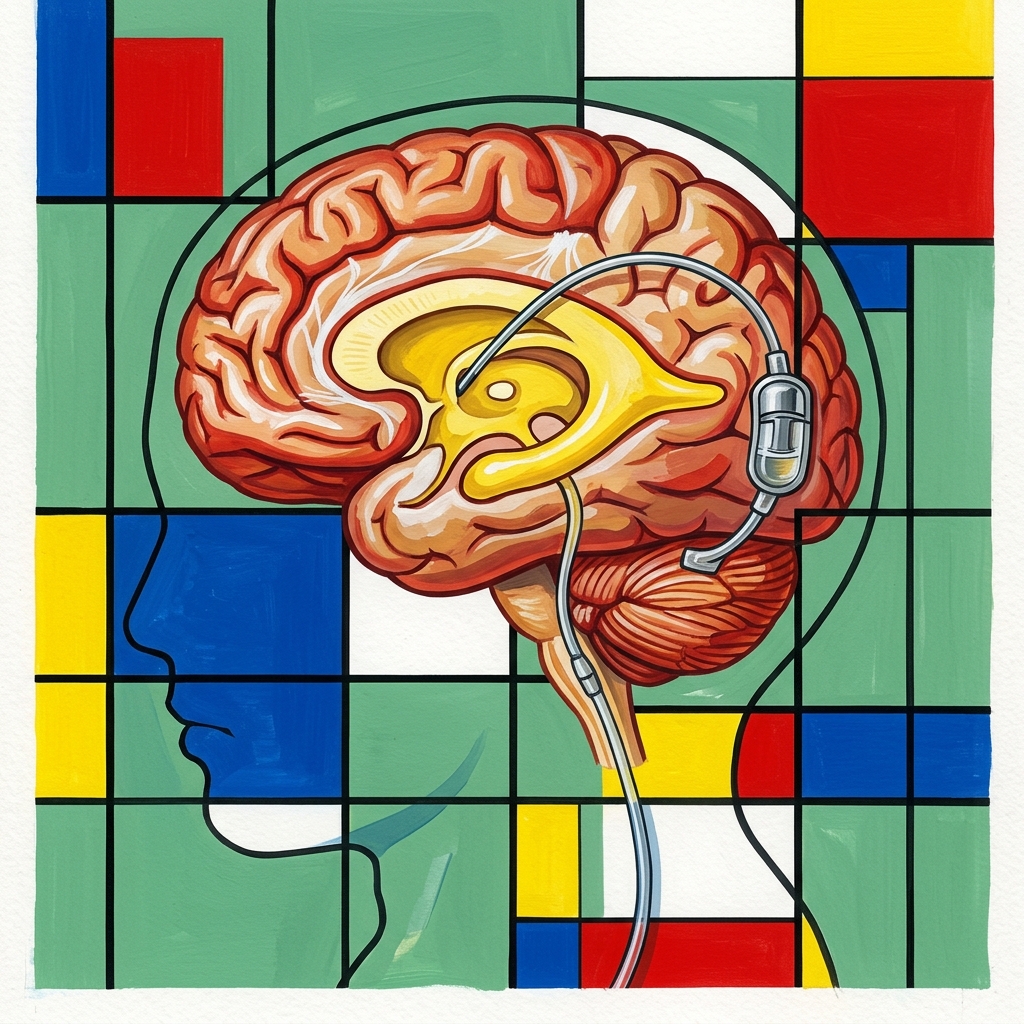 Advanced surgical technology and precision instrumentation.
 Expected outcomes
Shunt surgery is effective in controlling hydrocephalus in the majority of patients, though shunts require lifelong monitoring and may need revision. ETV avoids the need for a shunt in suitable patients. For NPH, early treatment produces the best improvement in gait, cognition, and continence.
 Rehabilitation pathways and safe movement restoration.
 Frequently asked questions
Can hydrocephalus be cured?
Hydrocephalus can be effectively treated but usually requires ongoing management. A VP shunt controls fluid accumulation but needs lifelong monitoring. ETV may provide a more permanent solution for certain types of hydrocephalus.
What is normal pressure hydrocephalus?
NPH is a form of hydrocephalus occurring in older adults where the ventricles are enlarged but the measured CSF pressure is within the normal range. It causes a characteristic pattern of gait difficulty, cognitive decline, and urinary incontinence, and is one of the few treatable causes of dementia.