Meningioma
A meningioma is a tumour that arises from the meninges, the protective membranes surrounding the brain and spinal cord. Meningiomas are the most common primary brain tumour and are almost always benign. Many are discovered incidentally and may not require immediate treatment.

Symptoms
- Many meningiomas cause no symptoms and are found incidentally on imaging.
- Headaches that gradually worsen over months or years.
- Seizures.
- Vision changes or double vision depending on tumour location.
- Progressive weakness or numbness in the limbs.
- Speech or cognitive changes.
- Hearing loss if the tumour is near the auditory nerve.
 Clinical anatomical model showing affected spinal structures (no text).
 Causes and risk factors
- The exact cause is usually unknown.
- Previous cranial radiation exposure.
- Female hormones may play a role (meningiomas are more common in women).
- Neurofibromatosis type 2 increases the risk of multiple meningiomas.
- Age: most common between 40 and 70 years.
How diagnosis is made
- MRI with contrast showing a characteristic enhancing extra-axial mass.
- CT scan, which may show calcification within the tumour.
- Catheter angiography if the tumour is large and pre-operative embolisation is being considered.
 Typical diagnostic grey-scale imaging scan (MRI/CT).
 Non-surgical treatment options
- Observation with serial MRI scans for small, asymptomatic meningiomas.
- Stereotactic radiosurgery (focused radiation) for small tumours in challenging locations.
- Anti-seizure medications if seizures have occurred.
When surgery may be considered
Surgery is recommended for symptomatic meningiomas, growing tumours, or tumours causing brain compression. The goal is complete removal, which is curative in most cases. The surgical approach depends on tumour size and location.
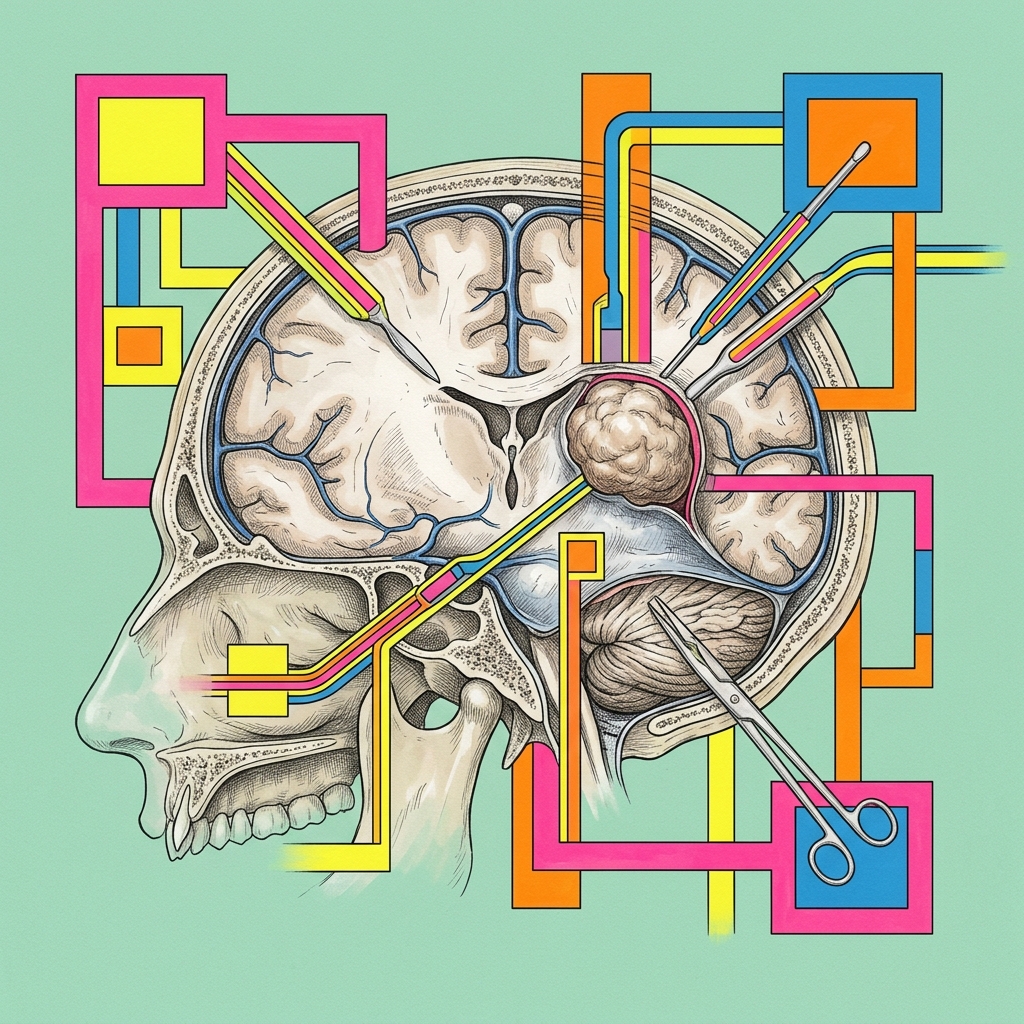 Advanced surgical technology and precision instrumentation.
 Expected outcomes
Complete surgical removal of a benign meningioma has cure rates exceeding 90%. Recurrence risk is low after complete removal but increases with subtotal removal. Long-term imaging surveillance is recommended.
 Rehabilitation pathways and safe movement restoration.
 Frequently asked questions
Do all meningiomas need to be removed?
No. Small, incidental meningiomas that are not causing symptoms can often be safely monitored with periodic MRI scans. Surgery is recommended when the tumour is growing, causing symptoms, or compressing the brain.