Meralgia Paresthetica
Meralgia Paresthetica is a neurological condition caused by compression of the lateral femoral cutaneous nerve—a purely sensory nerve that supplies sensation to the outer thigh. This compression leads to burning pain, numbness, and tingling in the outer aspect of the thigh, whilst leaving muscle strength unaffected.

Symptoms
- Burning pain or aching in the outer (lateral) aspect of the thigh.
- Numbness or reduced sensitivity to touch in the outer thigh.
- Tingling, buzzing, or pins-and-needles sensations in the affected area.
- Increased sensitivity to light touch (hyperaesthesia) or clothing contact.
- Symptoms typically worsened by prolonged standing or walking, and improved by sitting.
 Clinical anatomical model showing affected spinal structures (no text).
 Causes and risk factors
- Compression of the lateral femoral cutaneous nerve as it passes under the inguinal ligament in the groin.
- Repetitive mechanical pressure from tight clothing, belts, or heavy utility belts.
- Obesity or rapid weight gain increasing pressure in the groin region.
- Pregnancy.
- Diabetes mellitus increasing nerve vulnerability.
- Prior local surgery or trauma in the groin area.
How diagnosis is made
- Clinical examination mapping sensory changes precisely to the outer thigh without motor weakness.
- Nerve conduction studies or electromyography to evaluate the lateral femoral cutaneous nerve.
- Diagnostic local anaesthetic injection near the inguinal ligament (confirming the nerve as the source of pain).
- Ultrasound of the groin to visualise the nerve pathway.
 Typical diagnostic grey-scale imaging scan (MRI/CT).
 Non-surgical treatment options
- Removing mechanical sources of pressure by wearing looser clothing and suspenders instead of belts.
- Weight management to reduce abdominal pressure.
- Oral medications including anti-inflammatories or neuropathic pain modulators (e.g., gabapentin).
- Local corticosteroid and anaesthetic injections near the inguinal ligament for symptom relief.
- Activity modification.
When surgery may be considered
Surgery is rarely required and is only considered when severe, burning pain is refractory to all conservative measures, including multiple targeted nerve blocks, and significantly impacts the patient's quality of life. The procedure involves decompressing the nerve at the groin.
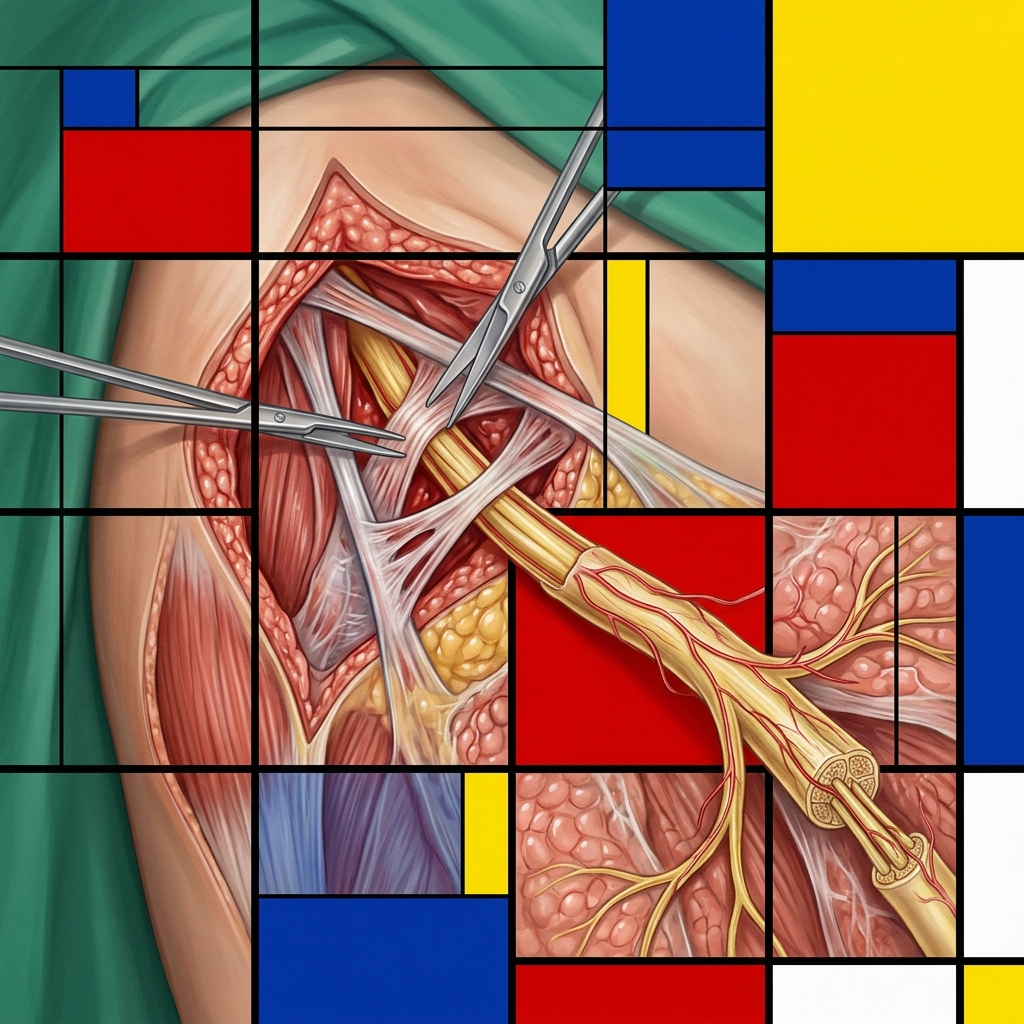 Advanced surgical technology and precision instrumentation.
 Expected outcomes
The vast majority of patients achieve complete symptom resolution through simple conservative measures and lifestyle adjustments. When surgical decompression (neurolysis) is performed, it provides effective and long-lasting relief in over 85% of cases.
 Rehabilitation pathways and safe movement restoration.
 Frequently asked questions
Will meralgia paresthetica cause my leg to become weak?
No. The lateral femoral cutaneous nerve is a purely sensory nerve and has no motor fibers. Meralgia paresthetica causes sensory symptoms like burning and numbness in the outer thigh, but it will never cause leg weakness or foot drop.