Occipital Neuralgia
Occipital neuralgia is a distinctive type of headache caused by irritation or compression of the greater or lesser occipital nerves. It produces sharp, stabbing, or electric-shock-like pain in the back of the head and upper neck, often radiating to the scalp behind the ear. It is frequently confused with migraine or tension headache.

Symptoms
- Sharp, shooting, or electric-shock-like pain in the back of the head and upper neck.
- Pain typically starts at the base of the skull and radiates upwards over the scalp.
- Pain may radiate behind the ear, to the temple, or behind the eye on the affected side.
- Scalp tenderness, particularly over the greater occipital nerve.
- Pain triggered or worsened by neck movement, pressure on the back of the head (pillow contact), or hair brushing.
- Episodes may last from seconds to minutes but can become continuous in severe cases.
 Clinical anatomical model showing affected spinal structures (no text).
 Causes and risk factors
- Entrapment of the occipital nerves as they pass through the muscles and fascia at the base of the skull.
- Cervical spine degeneration or arthritis at C1-C2 or C2-C3.
- Tight neck muscles (trapezius, semispinalis) causing nerve irritation.
- Previous neck trauma, including whiplash.
- Cervical disc disease affecting the upper cervical nerve roots.
- Rarely, tumours or vascular malformations affecting the upper cervical nerves.
How diagnosis is made
- Clinical examination with tenderness over the greater occipital nerve at the nuchal ridge.
- Diagnostic nerve block: temporary relief from local anaesthetic injection at the occipital nerve confirms the diagnosis.
- MRI of the cervical spine and craniocervical junction to exclude structural causes.
- MRI of the brain if intracranial pathology is suspected.
- CT of the upper cervical spine if bony pathology (arthritis, fracture) is suspected.
 Typical diagnostic grey-scale imaging scan (MRI/CT).
 Non-surgical treatment options
- Greater occipital nerve block with local anaesthetic and corticosteroid.
- Neuropathic pain medications: gabapentin, pregabalin, or amitriptyline.
- Physiotherapy targeting cervical posture, upper cervical mobilisation, and muscle relaxation.
- Transcutaneous electrical nerve stimulation (TENS).
- Botulinum toxin injections for refractory cases.
- Heat therapy and massage to the suboccipital muscles.
When surgery may be considered
Surgical treatment (occipital nerve decompression, neurolysis, or stimulator implantation) is considered only for severe, refractory occipital neuralgia that has failed comprehensive conservative treatment including repeated nerve blocks and medication trials.
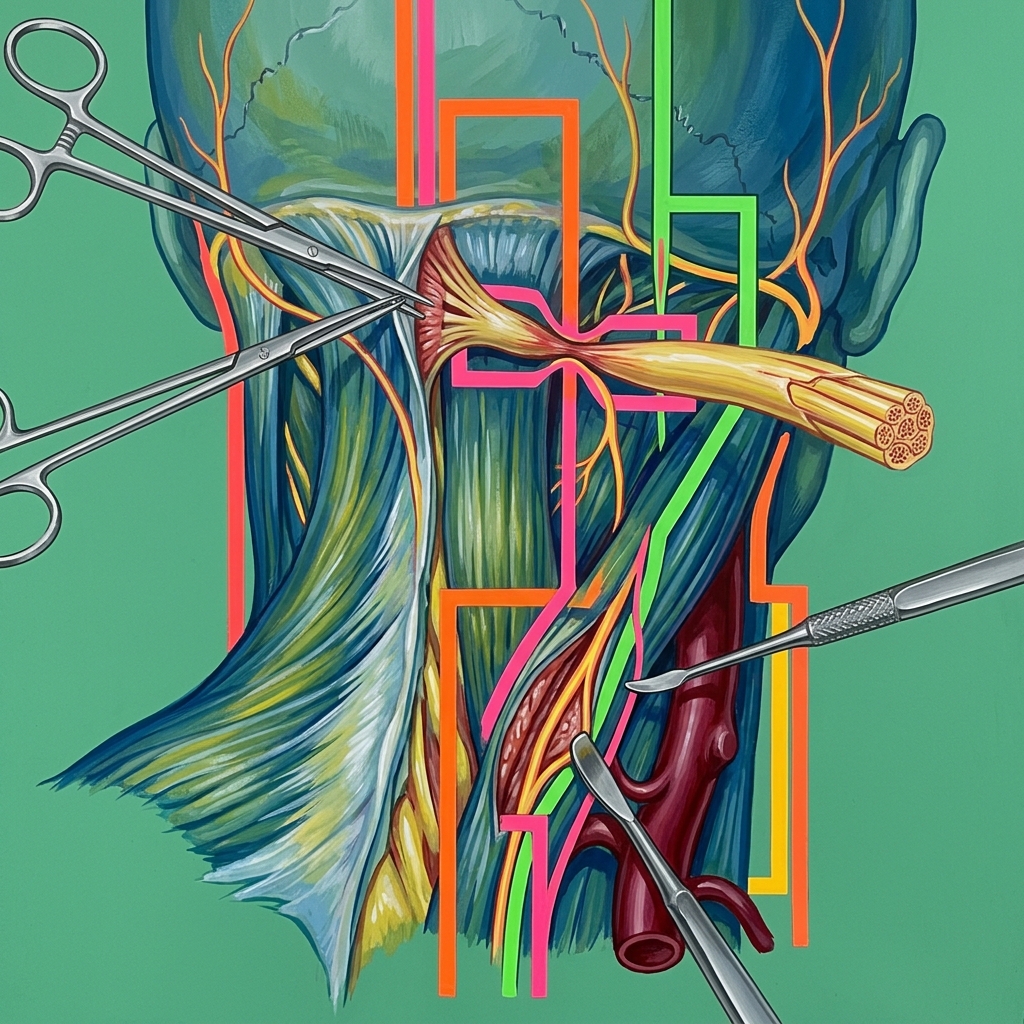 Advanced surgical technology and precision instrumentation.
 Expected outcomes
The majority of patients with occipital neuralgia achieve good relief with nerve blocks and medication. For refractory cases, occipital nerve stimulation can provide sustained relief in carefully selected patients. Surgical decompression results are variable.
 Rehabilitation pathways and safe movement restoration.
 Frequently asked questions
How is occipital neuralgia different from a migraine?
Occipital neuralgia causes sharp, electric-shock-like pain originating from the base of the skull, with tenderness over the occipital nerve. Migraines typically involve throbbing pain, nausea, and light sensitivity. However, the two can coexist, and occipital neuralgia can trigger migraine-like headaches, complicating the diagnosis.
How long does an occipital nerve block last?
Relief from a diagnostic occipital nerve block with local anaesthetic may last hours to days. When corticosteroid is added, relief can persist for weeks to months. Repeat injections are safe and can be performed as needed for ongoing management.