Piriformis Syndrome
Piriformis syndrome is a controversial and debated condition in which the piriformis muscle in the buttock irritates or compresses the sciatic nerve, causing pain, tingling, or numbness in the buttock and along the back of the leg. It can mimic lumbar disc herniation and sciatica, making accurate diagnosis important.

Symptoms
- Deep, aching pain in the buttock, often on one side.
- Pain that radiates down the back of the thigh and leg (mimicking sciatica).
- Pain worsened by sitting for prolonged periods, climbing stairs, or crossing legs.
- Tenderness over the piriformis muscle in the deep buttock.
- Numbness or tingling in the buttock or posterior thigh.
- Pain aggravated by internal rotation of the hip.
 Clinical anatomical model showing affected spinal structures (no text).
 Causes and risk factors
- Anatomical variation: in approximately 15% to 20% of people, the sciatic nerve passes through or splits around the piriformis muscle.
- Muscle spasm or tightness of the piriformis from overuse, trauma, or prolonged sitting.
- Direct trauma to the buttock (fall, contusion).
- Repetitive hip movements in athletes (runners, cyclists).
- Post-surgical scarring in the pelvic or hip region.
- The condition remains diagnostically uncertain, as imaging findings are often nonspecific.
How diagnosis is made
- Clinical examination including specific provocation tests (Freiberg test, FAIR test, Beatty test, Pace sign).
- MRI of the lumbar spine and pelvis to exclude lumbar disc herniation and other structural causes.
- MR neurography to visualise the sciatic nerve and piriformis muscle relationship.
- Diagnostic injection of local anaesthetic into the piriformis muscle under imaging guidance.
- Nerve conduction studies to exclude lumbar radiculopathy.
 Typical diagnostic grey-scale imaging scan (MRI/CT).
 Non-surgical treatment options
- Physiotherapy focusing on piriformis stretching, hip strengthening, and postural correction.
- Non-steroidal anti-inflammatory medications.
- Activity modification and avoidance of prolonged sitting.
- Corticosteroid or local anaesthetic injection into the piriformis muscle.
- Botulinum toxin injection into the piriformis for refractory cases.
When surgery may be considered
Surgical release of the piriformis muscle and decompression of the sciatic nerve is considered only in severe, refractory cases that have failed comprehensive conservative treatment over at least 6 to 12 months. Surgery is uncommon and reserved for carefully selected patients with clear diagnostic confirmation.
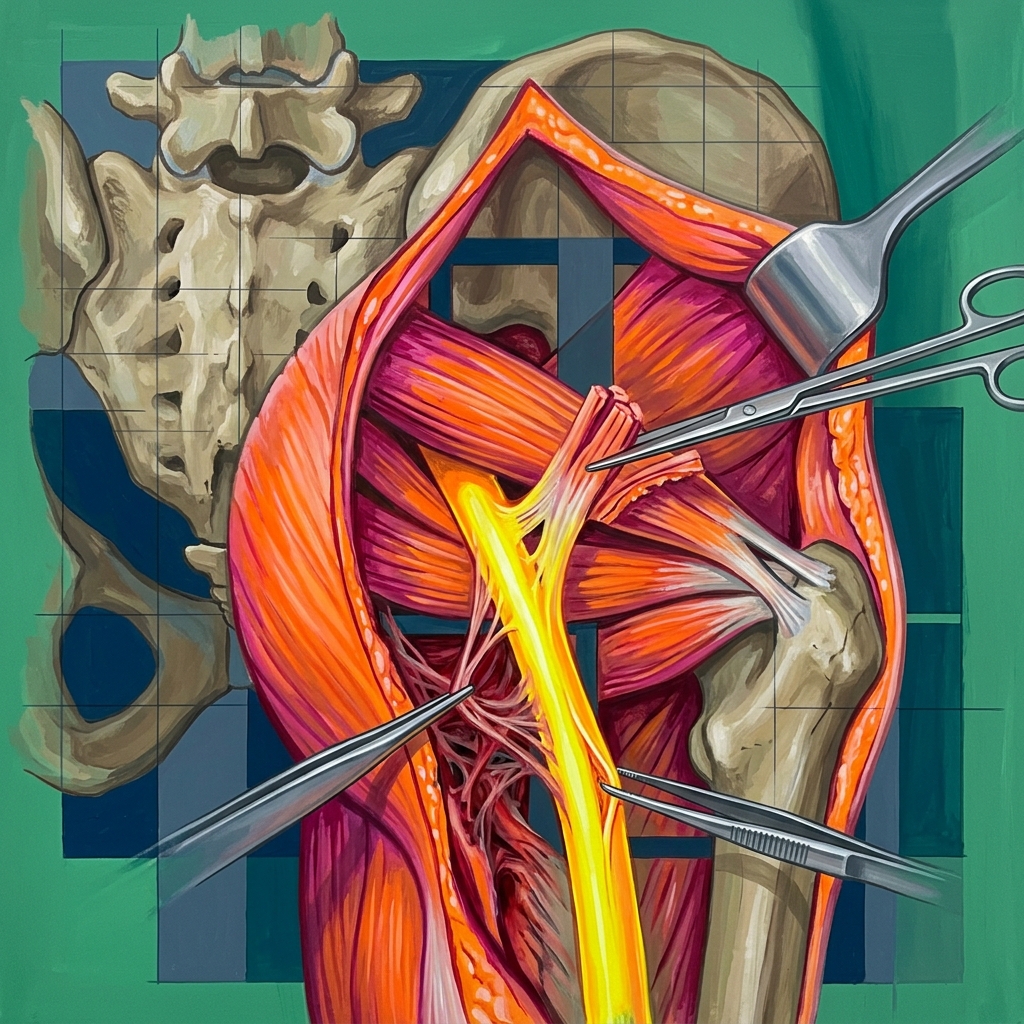 Advanced surgical technology and precision instrumentation.
 Expected outcomes
The majority of patients with piriformis syndrome respond to conservative treatment including physiotherapy, activity modification, and targeted injections. Surgical outcomes are variable and best in patients with clearly confirmed sciatic nerve compression by the piriformis muscle.
 Rehabilitation pathways and safe movement restoration.
 Frequently asked questions
How is piriformis syndrome different from sciatica?
Sciatica typically originates from compression of the sciatic nerve roots in the lumbar spine (usually by a herniated disc). Piriformis syndrome involves compression of the sciatic nerve in the buttock by the piriformis muscle. The symptoms can overlap significantly, which is why MRI of the spine and careful clinical examination are important to distinguish them.
Is piriformis syndrome a real diagnosis?
Piriformis syndrome is recognised as a clinical entity but remains controversial. Some clinicians question its prevalence because it is difficult to diagnose definitively. It is likely overdiagnosed in some settings and underdiagnosed in others. A methodical workup to exclude spinal causes is essential.