Tarsal Tunnel Syndrome
Tarsal Tunnel Syndrome is a painful compression neuropathy of the posterior tibial nerve as it passes through the narrow tarsal tunnel on the inner aspect of the ankle. It causes burning pain, numbness, and tingling along the sole of the foot, which typically worsens with prolonged weight-bearing.

Symptoms
- Burning pain, tingling, or aching in the sole of the foot or toes.
- Numbness or altered sensation on the bottom of the foot.
- Pain that is worse with standing, walking, or running, and improves with rest.
- Tenderness or an electric shock-like sensation when tapping the inner ankle (positive Tinel sign).
- Pain that may radiate upward into the calf or arch of the foot.
 Clinical anatomical model showing affected spinal structures (no text).
 Causes and risk factors
- Flat feet or fallen arches (pronation) causing increased stretch and tension on the tibial nerve.
- Local swelling or inflammation in the ankle due to sprains, arthritis, or systemic disease.
- Space-occupying lesions within the tunnel, such as varicose veins, ganglion cysts, or bone spurs.
- Repetitive weight-bearing strain or direct trauma to the ankle.
How diagnosis is made
- Clinical examination assessing sensory patterns and eliciting Tinel sign behind the medial malleolus.
- Nerve conduction studies and electromyography (EMG) to confirm tibial nerve compression.
- MRI of the ankle to evaluate for structural compressions like ganglion cysts.
- Ultrasound of the tarsal tunnel to assess nerve swelling.
 Typical diagnostic grey-scale imaging scan (MRI/CT).
 Non-surgical treatment options
- Custom orthotics, arch supports, or ankle bracing to correct foot biomechanics.
- Physiotherapy focusing on ankle stability, stretching, and nerve gliding.
- Anti-inflammatory medications or corticosteroid injections into the tarsal tunnel.
- Activity modification to reduce weight-bearing strain.
- Comfortable, supportive footwear.
When surgery may be considered
Surgical tarsal tunnel release is considered when conservative treatments fail to provide relief, particularly when nerve conduction studies confirm compression or an MRI identifies a structural lesion (such as a cyst or bone spur) compressing the nerve.
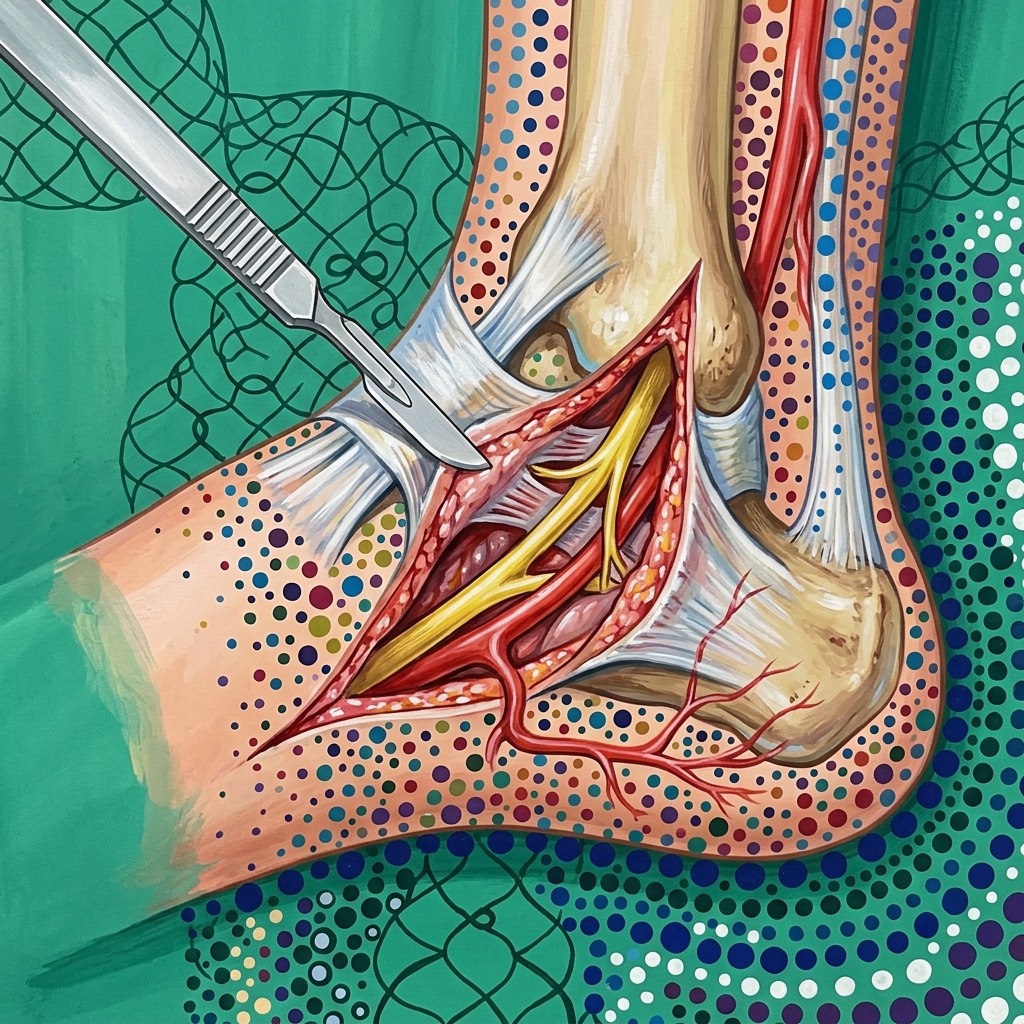 Advanced surgical technology and precision instrumentation.
 Expected outcomes
Surgical release is highly successful in relieving burning pain and numbness, especially when a specific compressing lesion is identified and removed. Biomechanical correction with orthotics is vital post-surgery to maintain long-term success.
 Rehabilitation pathways and safe movement restoration.
 Frequently asked questions
How does tarsal tunnel syndrome compare to plantar fasciitis?
Both cause sole-of-foot pain, but plantar fasciitis typically causes intense heel pain with the first steps in the morning that improves with walking, whereas tarsal tunnel syndrome causes burning pain and numbness that worsens with standing and walking throughout the day.