Thoracic Outlet Syndrome
Thoracic outlet syndrome (TOS) refers to a group of conditions caused by compression of nerves, arteries, or veins in the thoracic outlet — the space between the collarbone and the first rib. Neurogenic TOS (nerve compression) is the most common type, causing pain, numbness, and weakness in the arm and hand.

Symptoms
- Pain in the neck, shoulder, and arm, often worsened by overhead activities.
- Numbness and tingling in the fingers, typically the ring and little fingers (ulnar distribution).
- Weakness and fatigue of the hand with repetitive or overhead use.
- Coolness, colour changes, or swelling in the arm (vascular TOS).
- Headache and pain radiating into the side of the head or face.
- Symptoms typically worsen with arm elevation, carrying heavy objects, or prolonged computer use.
 Clinical anatomical model showing affected spinal structures (no text).
 Causes and risk factors
- Cervical rib (an extra rib arising from the seventh cervical vertebra), present in approximately 0.5% to 1% of the population.
- Fibrous bands or anomalous muscles in the thoracic outlet.
- Poor posture, particularly rounded shoulders and forward head position.
- Repetitive overhead arm movements (occupational or athletic).
- Previous trauma such as whiplash, clavicle fracture, or shoulder injury.
- Muscle hypertrophy of the scalene muscles.
How diagnosis is made
- Clinical examination including Adson test, Wright test, Roos test, and Spurling test (to exclude cervical radiculopathy).
- X-ray of the chest and cervical spine to identify a cervical rib or bony abnormality.
- MRI of the brachial plexus and thoracic outlet.
- CT angiography or venography if vascular TOS is suspected.
- Nerve conduction studies and EMG to assess neurogenic involvement and exclude other causes.
- Scalene muscle block with local anaesthetic as a diagnostic test.
 Typical diagnostic grey-scale imaging scan (MRI/CT).
 Non-surgical treatment options
- Physiotherapy focusing on postural correction, shoulder girdle strengthening, and scalene stretching.
- Ergonomic modifications at work to reduce overhead arm positioning.
- Anti-inflammatory and neuropathic pain medications.
- Activity modification and avoidance of aggravating positions.
- Weight management if applicable.
When surgery may be considered
Surgical decompression of the thoracic outlet (first rib resection, scalenectomy, or cervical rib excision) is considered when conservative measures fail after 3 to 6 months, when there is progressive neurological deficit, or in vascular TOS with evidence of arterial or venous compromise.
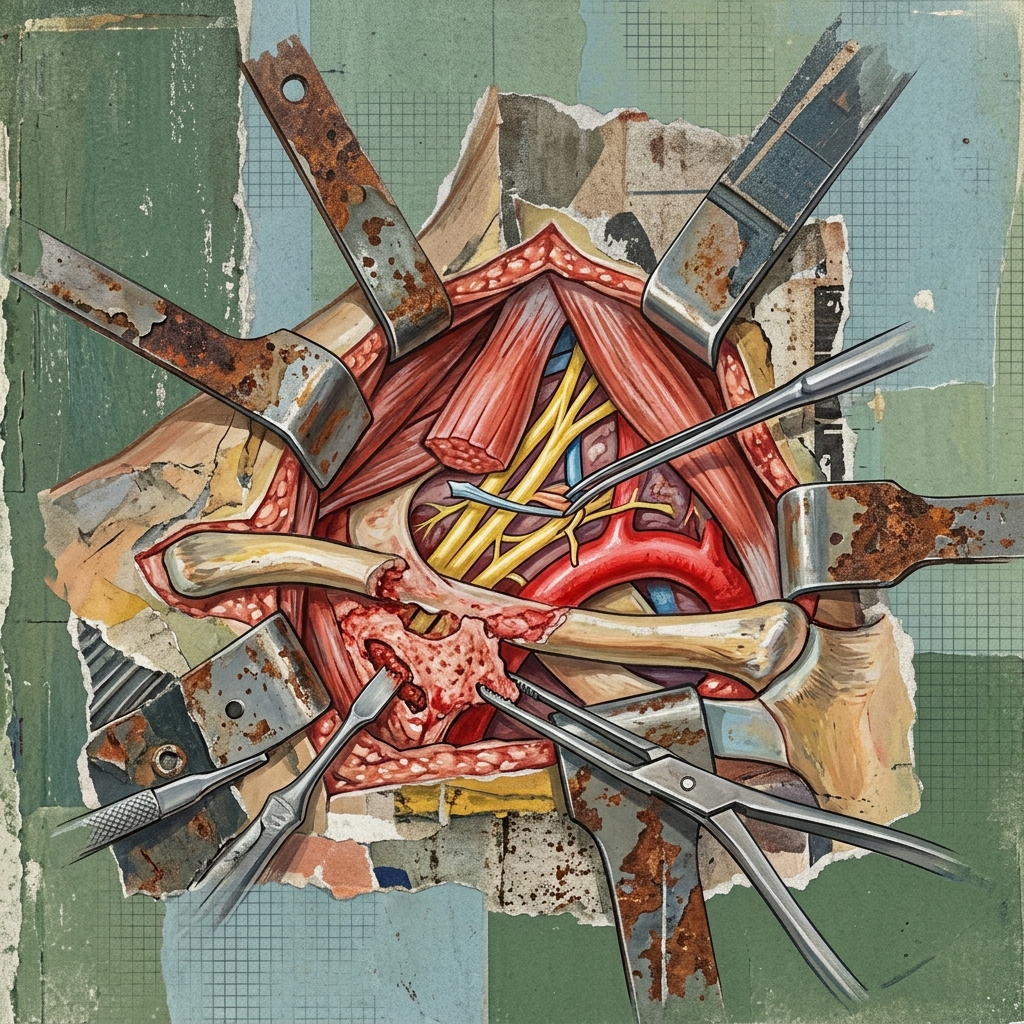 Advanced surgical technology and precision instrumentation.
 Expected outcomes
The majority of patients with neurogenic TOS improve significantly with dedicated physiotherapy. Surgical decompression provides good to excellent results in approximately 80% to 90% of carefully selected patients. Vascular TOS requires surgical intervention and generally has favourable outcomes when treated promptly.
 Rehabilitation pathways and safe movement restoration.
 Frequently asked questions
What is the difference between neurogenic and vascular TOS?
Neurogenic TOS (the most common type, over 90% of cases) involves compression of the brachial plexus nerves, causing pain, numbness, and weakness in the arm. Vascular TOS involves compression of the subclavian artery or vein, causing arm swelling, colour changes, or loss of pulses. Vascular TOS is less common but requires more urgent treatment.
Will I need to have a rib removed?
First rib resection is one of the surgical options for TOS that does not respond to conservative treatment. It is not always necessary — other approaches include scalenectomy or cervical rib excision depending on the cause. Surgery is only recommended after a thorough trial of non-operative management.