Ulnar Neuropathy
Ulnar neuropathy is compression of the ulnar nerve, most commonly at the elbow (cubital tunnel syndrome). It causes numbness in the ring and little fingers, hand weakness, and difficulty with grip strength and fine motor tasks.

Symptoms
- Numbness and tingling in the ring and little fingers.
- Weakness of grip and pinch strength.
- Difficulty with fine motor tasks such as turning keys, opening jars, or typing.
- Pain or aching at the inner aspect of the elbow.
- Symptoms worsened by prolonged elbow bending (phone use, sleeping with bent elbows).
- In advanced cases, visible wasting of the small muscles of the hand.
 Clinical anatomical model showing affected spinal structures (no text).
 Causes and risk factors
- Compression at the cubital tunnel (behind the inner elbow) from repetitive bending or prolonged pressure.
- Habitual leaning on the elbow.
- Previous elbow fracture or arthritis.
- Anatomical variants (subluxation of the nerve over the medial epicondyle).
- Less commonly, compression at the wrist (Guyon canal).
- Diabetes and other neuropathies increasing nerve vulnerability.
How diagnosis is made
- Clinical examination including Tinel test at the elbow and assessment of hand intrinsic muscle function.
- Nerve conduction studies and electromyography to localise and grade the compression.
- Ultrasound of the ulnar nerve to assess for compression and subluxation.
- MRI of the elbow if structural causes are suspected.
 Typical diagnostic grey-scale imaging scan (MRI/CT).
 Non-surgical treatment options
- Elbow splinting at night to prevent prolonged flexion.
- Activity modification: avoiding prolonged elbow bending and leaning on the elbow.
- Padding the elbow for protection.
- Anti-inflammatory medications.
- Nerve gliding exercises.
When surgery may be considered
Surgery is recommended when conservative measures fail, when nerve conduction studies show significant compression, or when there is progressive weakness or muscle wasting. Options include cubital tunnel decompression or ulnar nerve transposition.
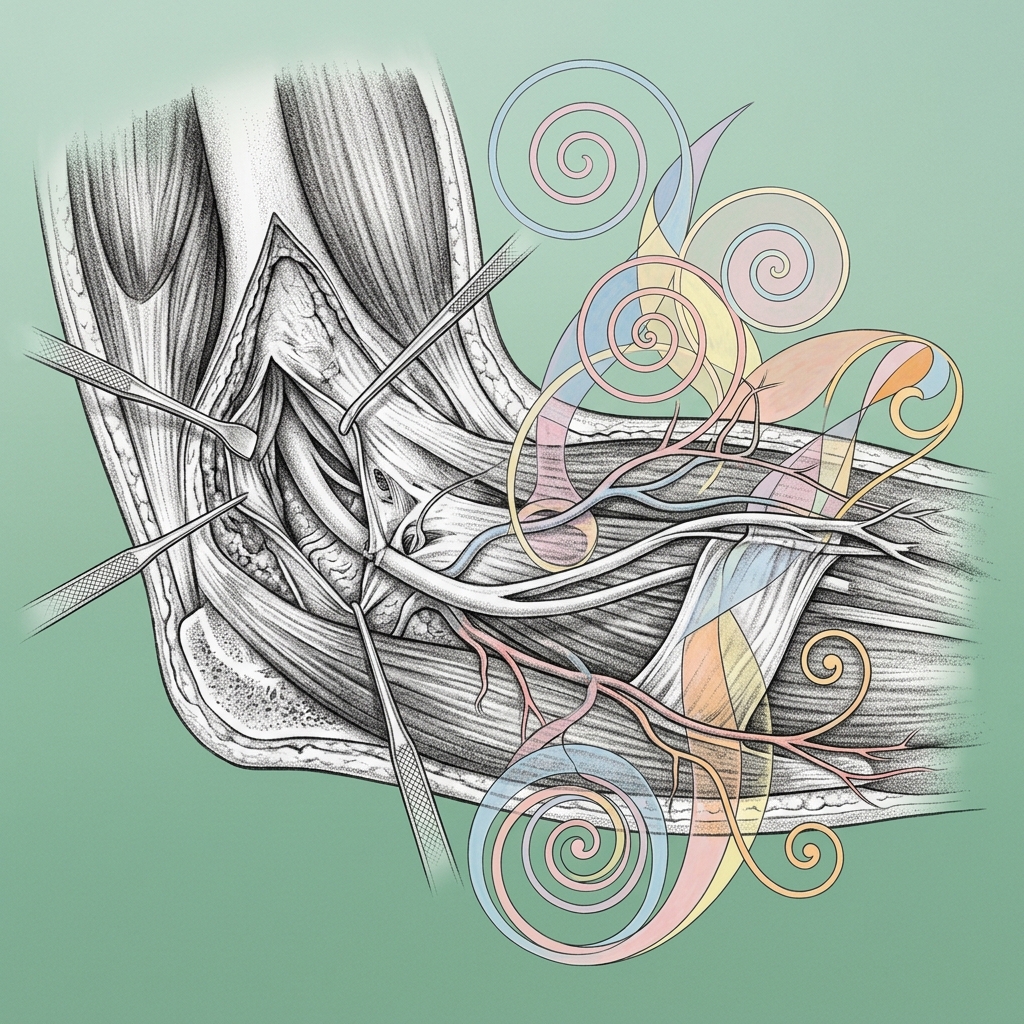 Advanced surgical technology and precision instrumentation.
 Expected outcomes
Surgical treatment is effective in relieving symptoms and preventing further nerve damage. Sensory recovery is generally good, though hand strength recovery depends on the severity and duration of compression before surgery. Earlier surgery typically produces better outcomes.
 Rehabilitation pathways and safe movement restoration.
 Frequently asked questions
Is cubital tunnel syndrome the same as carpal tunnel syndrome?
No. Cubital tunnel syndrome affects the ulnar nerve at the elbow, causing numbness in the ring and little fingers. Carpal tunnel syndrome affects the median nerve at the wrist, causing numbness in the thumb, index, and middle fingers. They are different conditions affecting different nerves.