Degenerative Spondylolisthesis
Degenerative spondylolisthesis is a condition where one vertebra slips forward over the one below it due to age-related wear and tear of the facet joints and disc. It most commonly affects the L4-L5 level and can cause spinal canal narrowing and nerve compression.
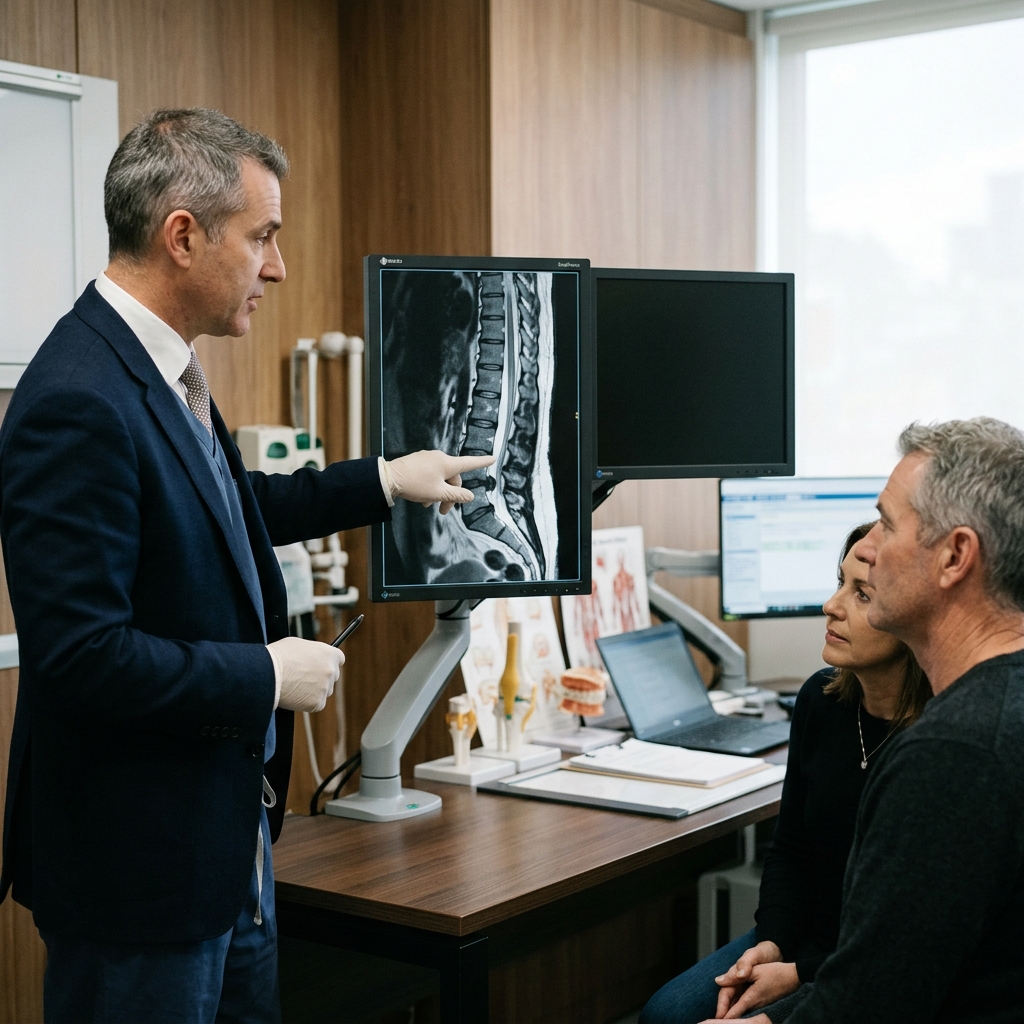
Symptoms
- Lower back pain that worsens with standing and walking.
- Leg pain, numbness, or tingling (neurogenic claudication) from associated spinal stenosis.
- Stiffness in the lower back, particularly after rest.
- Hamstring tightness and altered posture.
- In severe cases, progressive difficulty walking and leg weakness.
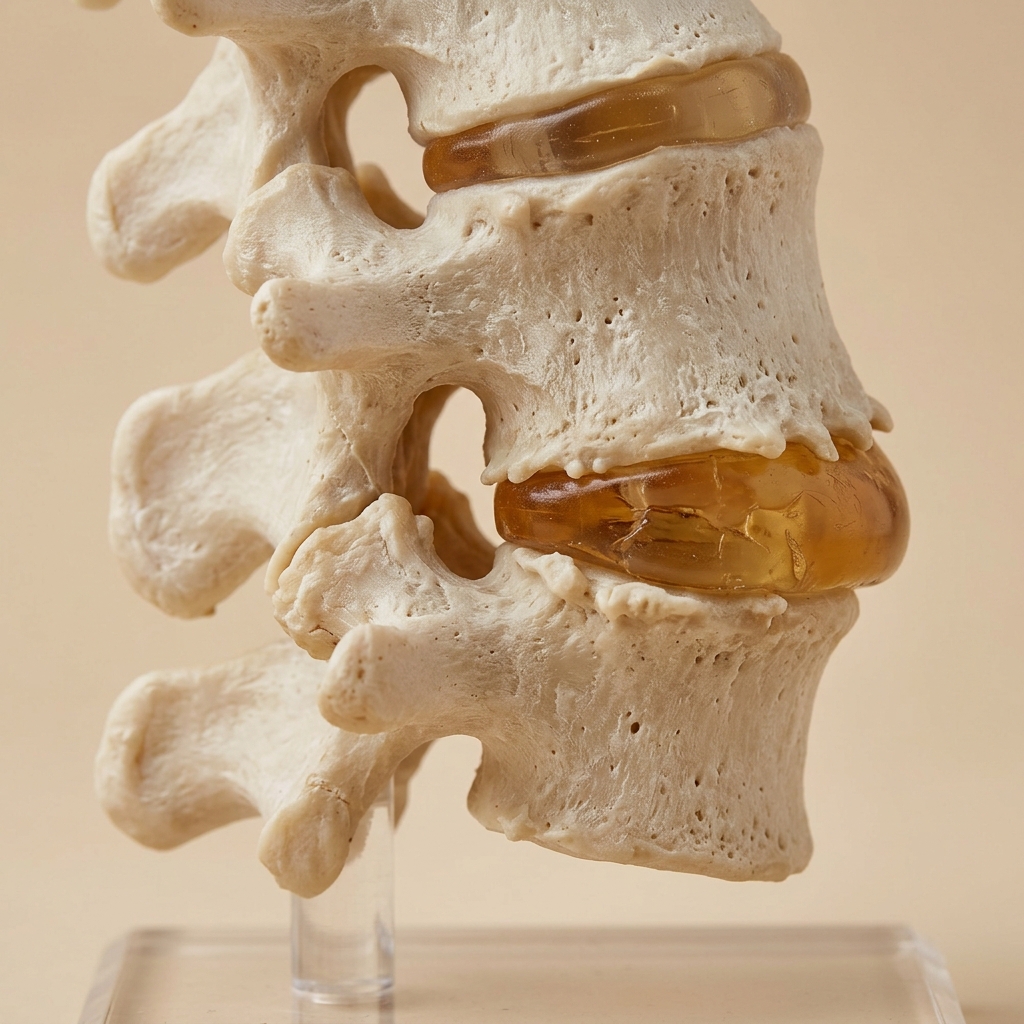 Clinical anatomical model showing affected spinal structures (no text).
 Causes and risk factors
- Age-related degeneration of the facet joints and intervertebral disc.
- Most common in women over 50 and at the L4-L5 level.
- Ligamentous laxity and facet joint arthropathy allowing forward vertebral slippage.
- Increased lumbar lordosis and body weight.
- Genetic predisposition to spinal degeneration.
How diagnosis is made
- Standing X-rays including flexion-extension views to measure the degree and stability of slippage.
- MRI scan to assess nerve compression, disc degeneration, and facet joint arthropathy.
- CT scan for detailed assessment of bony anatomy and facet joint changes.
- Clinical examination of gait, strength, and neurological function.
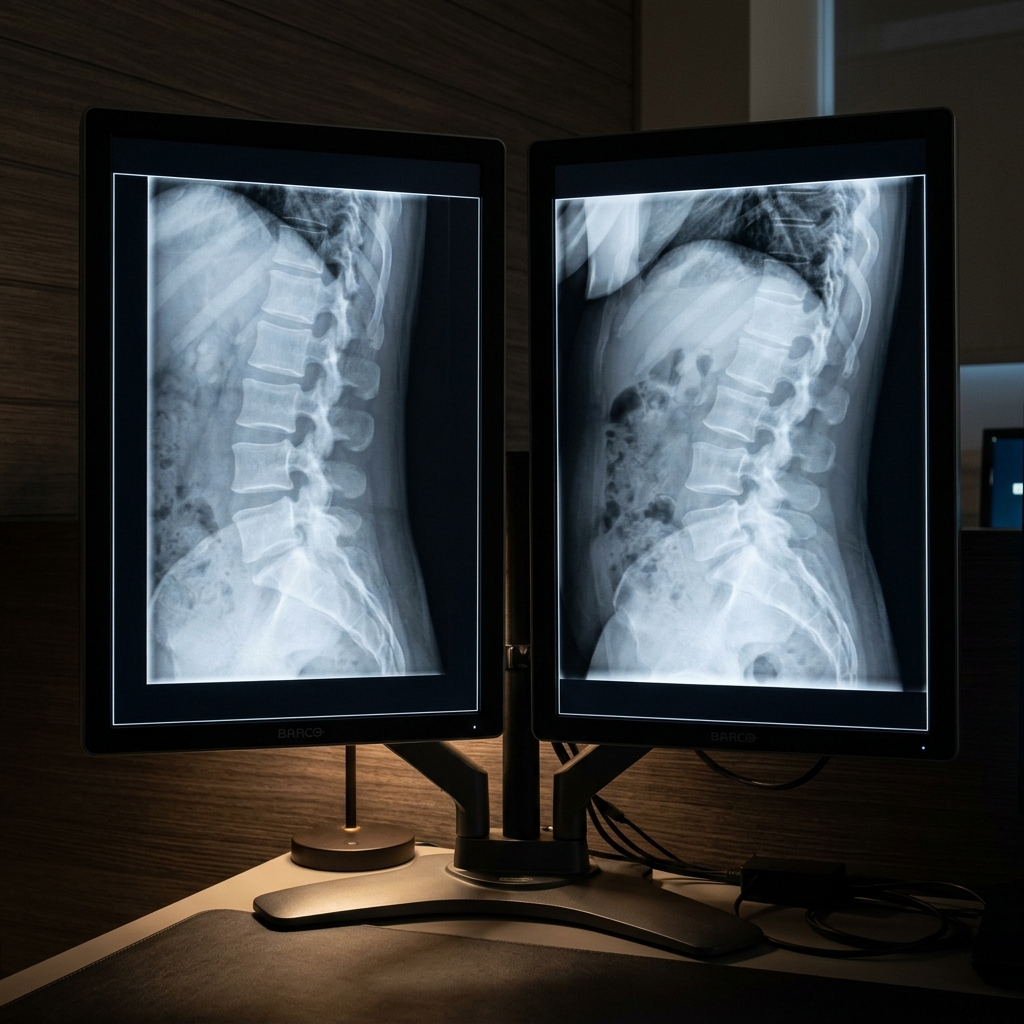 Typical diagnostic grey-scale imaging scan (MRI/CT).
 Non-surgical treatment options
- Physiotherapy focusing on core stabilisation and lumbar flexion-based exercises.
- Weight management to reduce spinal loading.
- Anti-inflammatory medications and targeted pain management.
- Epidural steroid injections for associated nerve compression symptoms.
- Activity modification to avoid prolonged standing and extension-based activities.
When surgery may be considered
Surgery may be considered when conservative treatment fails to adequately manage pain and functional limitation, or when there is progressive neurological deficit. Decompression with or without fusion is the standard surgical approach.
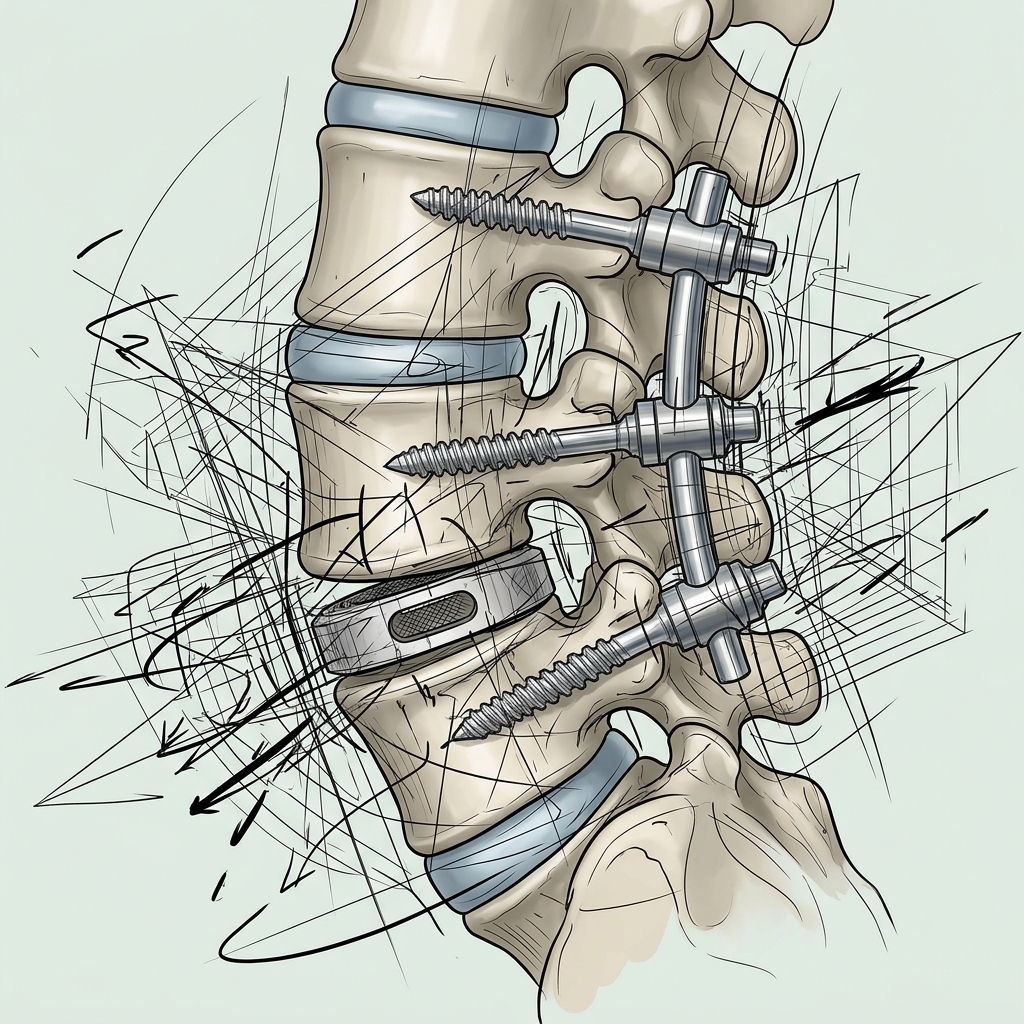 Advanced surgical technology and precision instrumentation.
 Expected outcomes
Surgical treatment is effective in relieving leg symptoms and stabilising the spine in approximately 80 to 90% of patients. Recovery typically involves 2 to 3 days in hospital and return to normal activities over 3 to 6 months.
 Rehabilitation pathways and safe movement restoration.
 Frequently asked questions
Is degenerative spondylolisthesis the same as spondylolysis?
No. Spondylolysis is a fracture (pars defect) in the vertebra, while degenerative spondylolisthesis is caused by wear and tear of the facet joints and disc without a fracture. They can both cause vertebral slippage but have different underlying causes.
Can spondylolisthesis get worse?
Degenerative spondylolisthesis can progress slowly over time, though many cases remain stable. Regular clinical and radiological monitoring helps track any changes.
Will I need a spinal fusion?
Not always. Decompression alone may be sufficient for stable slips. Fusion is added when the vertebral segment is unstable or when the degree of slippage is significant.