Facet Arthropathy
Facet arthropathy is degenerative arthritis of the facet joints that connect the vertebrae. These small paired joints at the back of the spine help guide spinal movement and bear load. When they become arthritic, they can cause localised back or neck pain, stiffness, and referred pain.

Symptoms
- Localised pain in the back or neck, often to one side.
- Pain that worsens with extension (arching backward) and rotation.
- Morning stiffness that improves with gentle movement.
- Referred pain into the buttock or thigh (lumbar) or shoulder (cervical) without true nerve compression symptoms.
- Tenderness over the facet joints on examination.
- Pain that eases with forward bending.
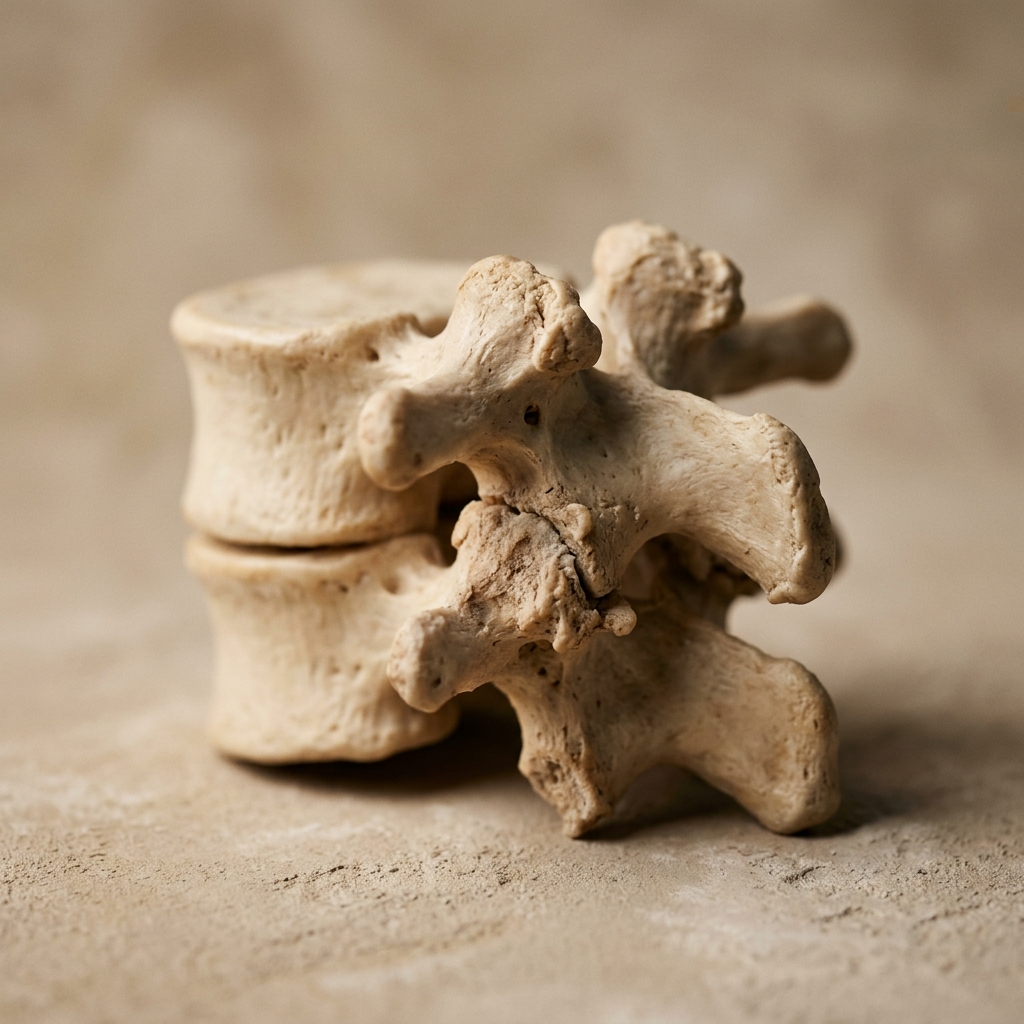 Clinical anatomical model showing affected spinal structures (no text).
 Causes and risk factors
- Age-related cartilage wear and joint degeneration.
- Disc height loss increasing load on the facet joints.
- Repetitive extension and rotational loading.
- Previous spinal injury or surgery.
- Obesity and sedentary lifestyle.
- Genetic predisposition.
How diagnosis is made
- Clinical examination with specific provocation tests for facet pain.
- X-rays showing facet joint enlargement, osteophytes, and sclerosis.
- MRI showing facet joint effusion, hypertrophy, and associated disc changes.
- CT scan for detailed bony assessment.
- Diagnostic medial branch block to confirm the facet joint as the pain source.
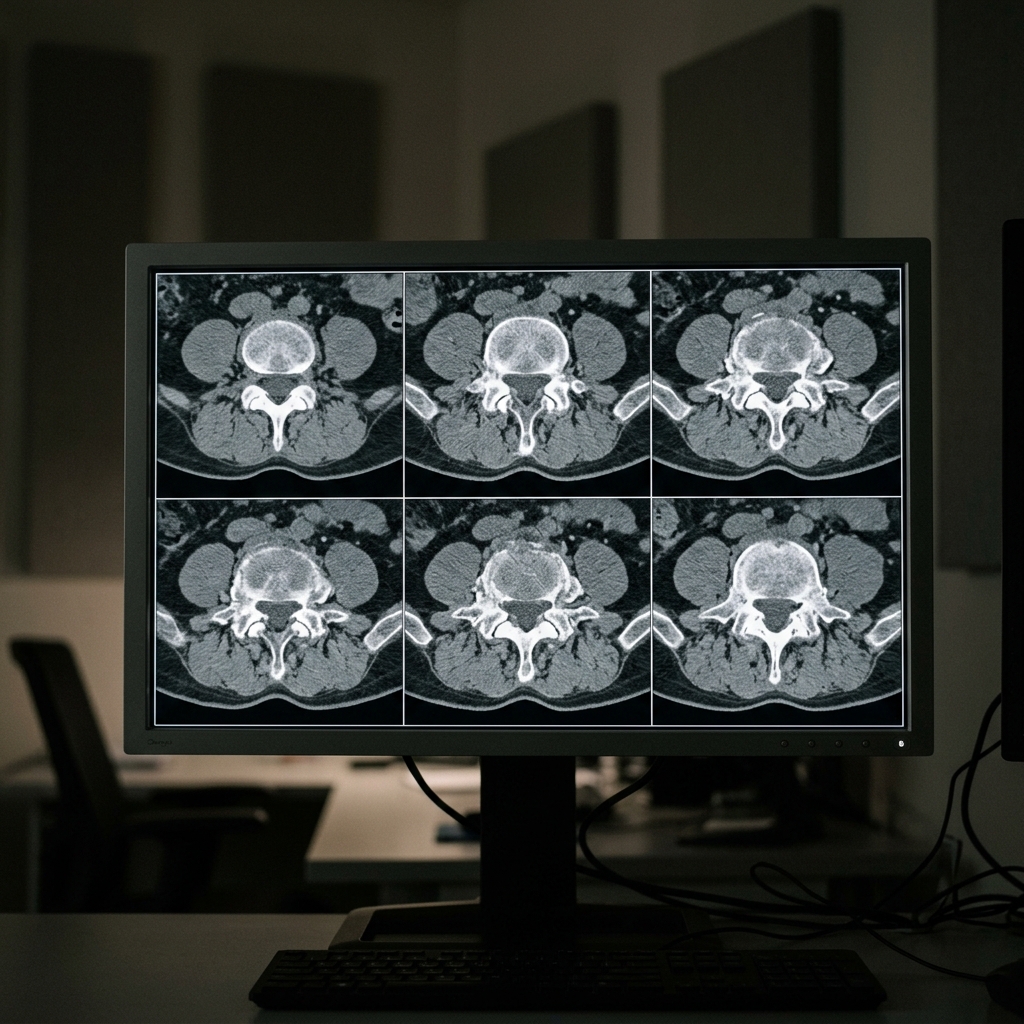 Typical diagnostic grey-scale imaging scan (MRI/CT).
 Non-surgical treatment options
- Physiotherapy with core strengthening and flexibility exercises.
- Anti-inflammatory medications.
- Facet joint injections with corticosteroid.
- Radiofrequency neurotomy (ablation) of the medial branch nerves for longer-lasting relief.
- Postural correction and ergonomic adjustments.
- Weight management.
When surgery may be considered
Surgery is rarely required for isolated facet arthropathy. It may be considered when facet joint disease contributes to spinal instability or stenosis requiring decompression and fusion.
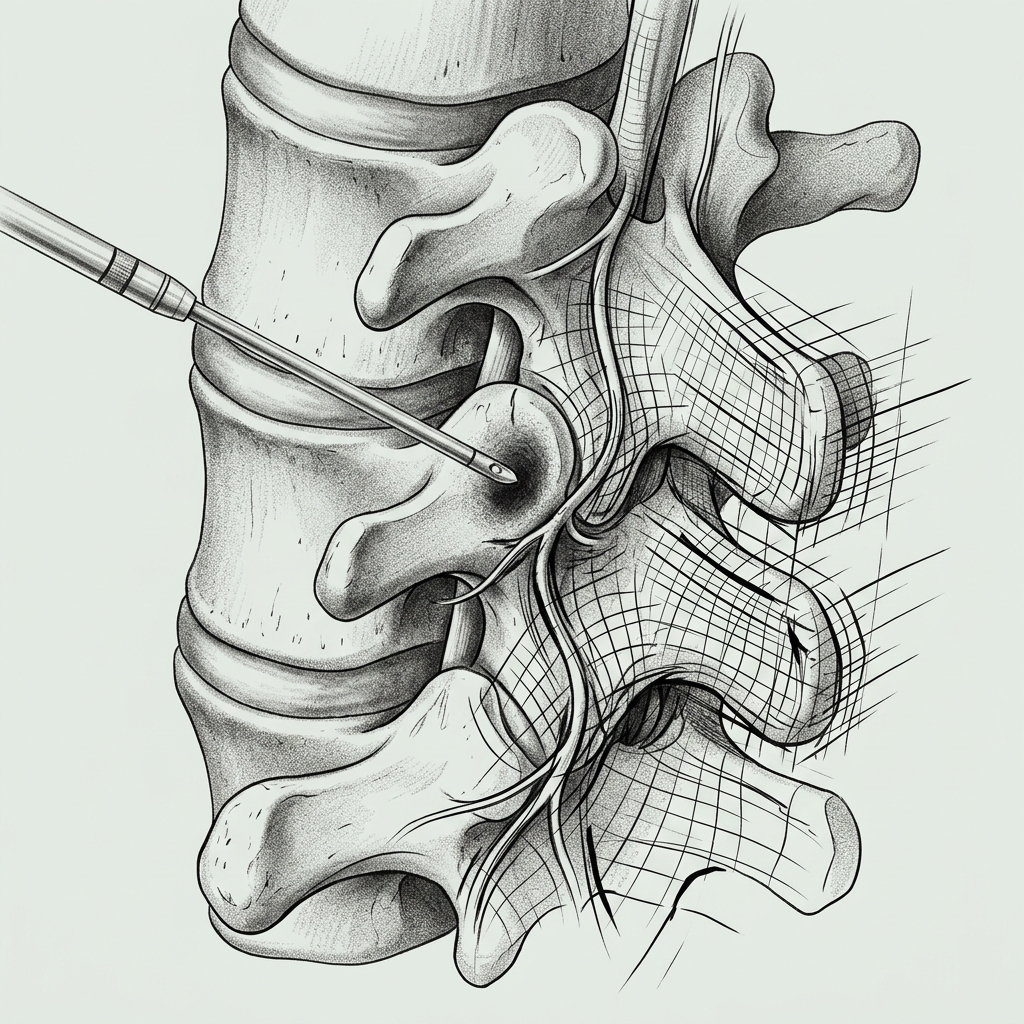 Advanced surgical technology and precision instrumentation.
 Expected outcomes
Most patients manage facet arthropathy effectively with conservative measures. Radiofrequency neurotomy provides relief lasting 6 to 18 months in appropriately selected patients. Outcomes are best when treatment is combined with ongoing exercise.
 Rehabilitation pathways and safe movement restoration.
 Frequently asked questions
What is the difference between facet arthropathy and a herniated disc?
Facet arthropathy involves the small joints at the back of the spine and typically causes localised back pain without nerve compression. A herniated disc involves the shock-absorbing disc between vertebrae and often causes radiating arm or leg pain from nerve compression.