Sacroiliac Joint Pain
Sacroiliac (SI) joint pain arises from the joint connecting the sacrum to the pelvis. It can mimic lower back conditions and cause pain in the lower back, buttock, and upper thigh. Diagnosis requires careful clinical assessment as imaging findings are often non-specific.

Symptoms
- Pain in the lower back and buttock, often on one side.
- Pain that may extend into the groin, hip, or upper thigh.
- Pain worsened by prolonged sitting, standing on one leg, or climbing stairs.
- Difficulty turning over in bed.
- Stiffness in the lower back and hips.
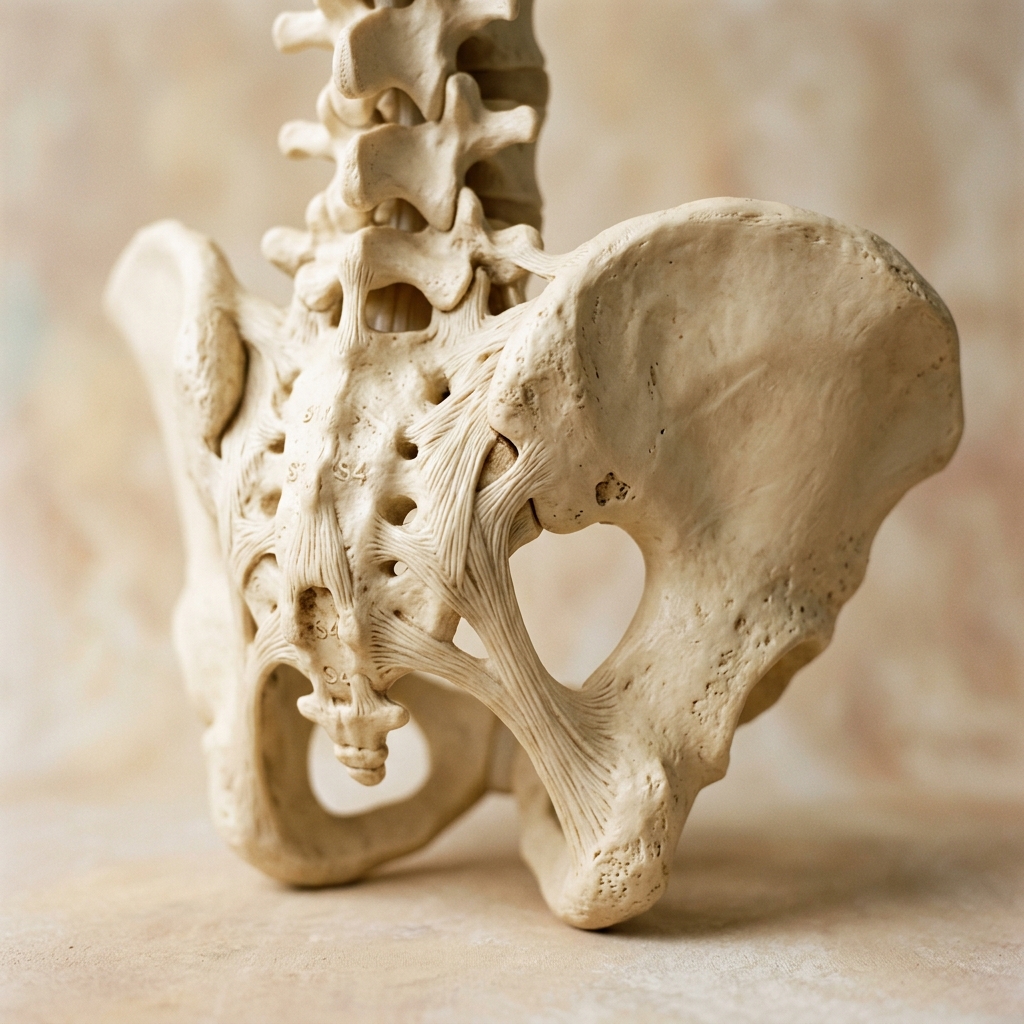 Clinical anatomical model showing affected spinal structures (no text).
 Causes and risk factors
- Degenerative arthritis of the SI joint.
- Pregnancy-related joint laxity.
- Altered gait mechanics, including leg length discrepancy.
- Previous lumbar fusion surgery altering pelvic biomechanics.
- Inflammatory conditions such as ankylosing spondylitis.
- Trauma to the pelvis.
How diagnosis is made
- Clinical examination with specific SI joint provocation tests.
- Diagnostic SI joint injection under imaging guidance (the gold standard for confirming the diagnosis).
- X-rays and MRI to exclude other causes and assess joint anatomy.
- Blood tests if inflammatory arthritis is suspected.
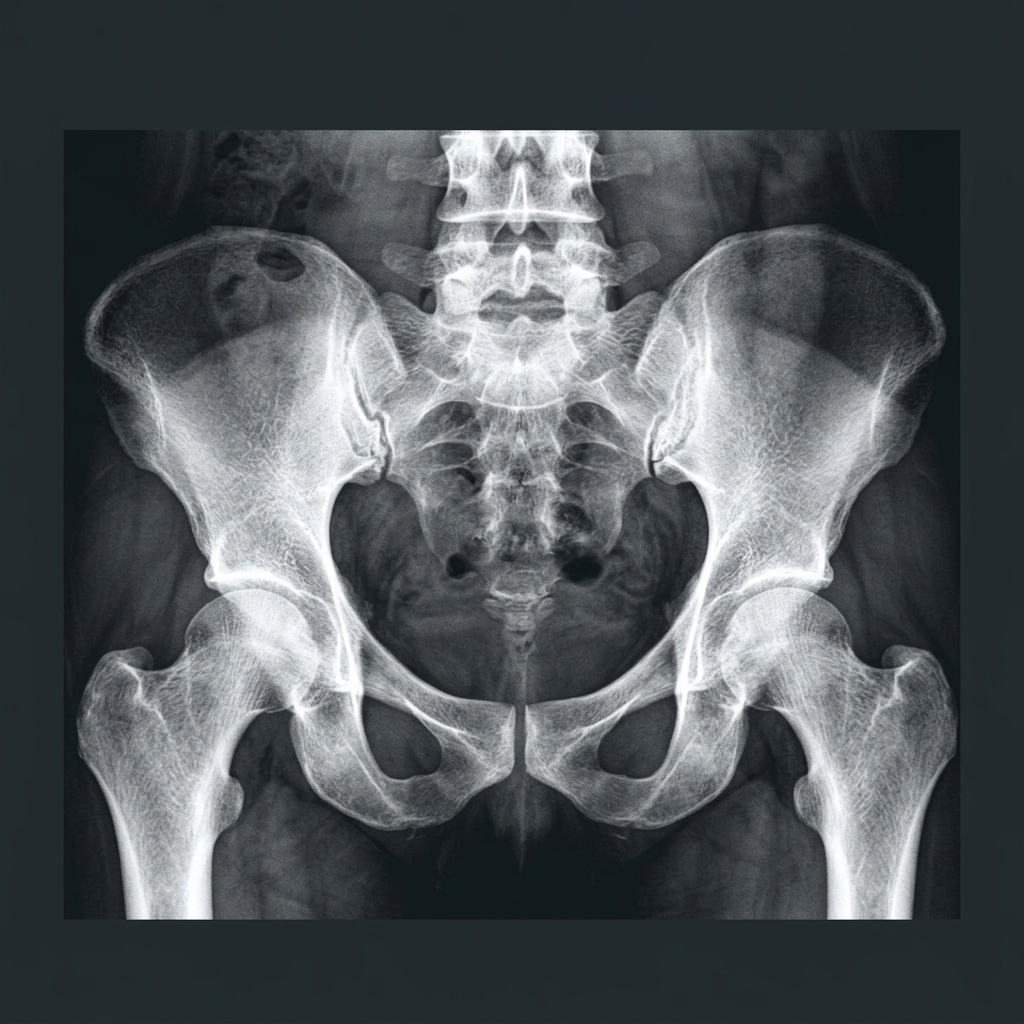 Typical diagnostic grey-scale imaging scan (MRI/CT).
 Non-surgical treatment options
- Physiotherapy targeting pelvic stability, gluteal strengthening, and stretching.
- SI joint corticosteroid injection for both diagnosis and treatment.
- Anti-inflammatory medications.
- Activity modification and pelvic support belt.
- Radiofrequency ablation of the SI joint nerves for persistent cases.
When surgery may be considered
SI joint fusion is considered in carefully selected patients who have confirmed SI joint pain (positive diagnostic injection) that has not responded to comprehensive conservative management including injections and physiotherapy.
 Advanced surgical technology and precision instrumentation.
 Expected outcomes
Conservative treatment is effective for the majority of patients. When SI joint fusion is indicated, it provides meaningful pain reduction in approximately 70 to 80% of carefully selected patients.
 Rehabilitation pathways and safe movement restoration.
 Frequently asked questions
How is SI joint pain different from sciatica?
SI joint pain typically causes pain in the lower back, buttock, and upper thigh without extending below the knee, while sciatica usually radiates all the way down the leg into the calf or foot. A diagnostic injection is the most reliable way to confirm SI joint pain.