Spinal Tumour
Spinal tumours are abnormal growths that develop within or around the spinal cord, nerve roots, or vertebral bones. They may be primary (originating in the spine) or secondary (metastatic, spreading from cancer elsewhere in the body). Early detection and appropriate management are essential.
Symptoms
- Progressive back or neck pain that is worse at night or at rest.
- Pain that does not improve with standard treatment and may worsen over time.
- Neurological symptoms including weakness, numbness, or tingling in the arms or legs.
- Difficulty walking or maintaining balance.
- Bladder or bowel dysfunction in advanced cases.
- Unexplained weight loss or fatigue (in metastatic disease).
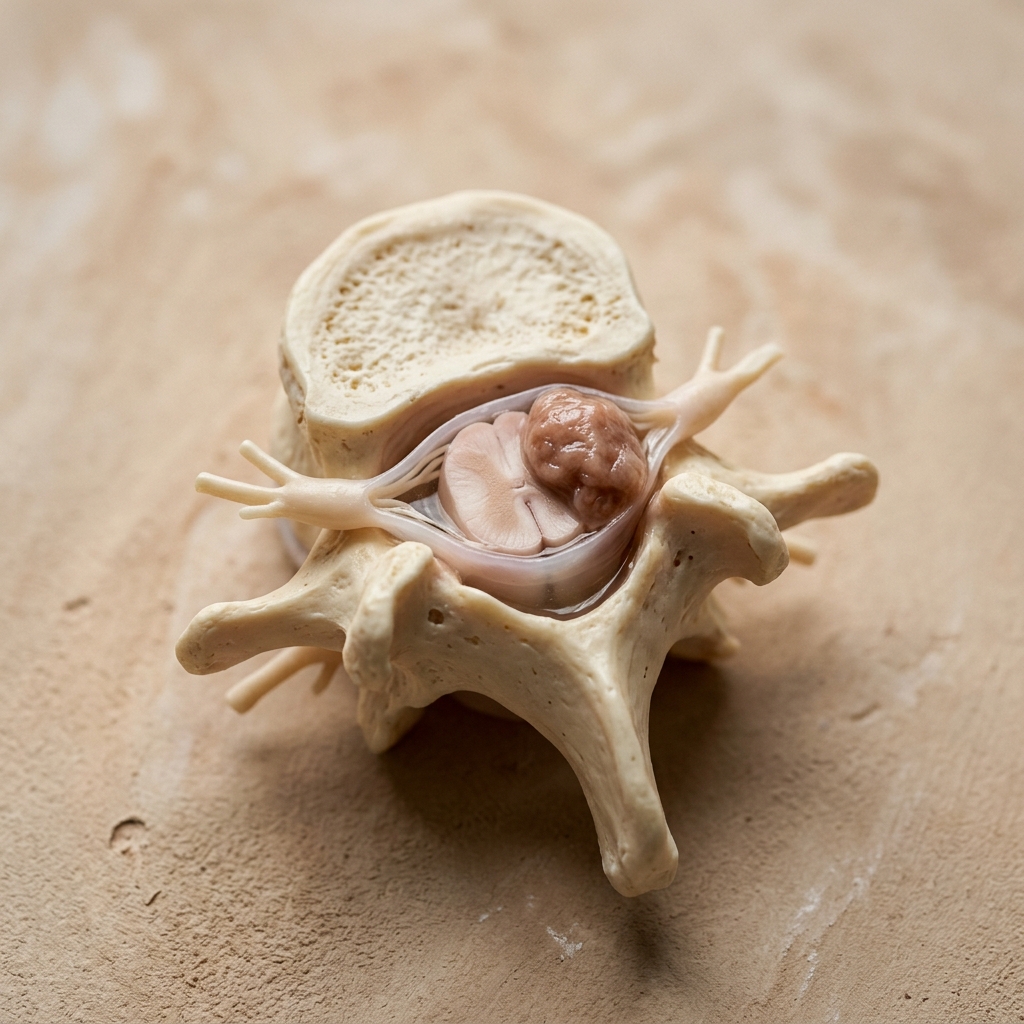 Clinical anatomical model showing affected spinal structures (no text).
 Causes and risk factors
- Metastatic spread from primary cancers (lung, breast, prostate, kidney, thyroid are the most common).
- Primary spinal tumours including meningiomas, schwannomas, and ependymomas.
- Primary bone tumours of the vertebrae.
- The exact cause of primary spinal tumours is often unknown.
How diagnosis is made
- MRI with contrast is the primary imaging study for spinal tumours.
- CT scan for assessment of bony involvement.
- Whole-body imaging (CT, PET scan) to assess for primary cancer if metastatic disease is suspected.
- Biopsy may be required to determine the tumour type.
- Blood tests including tumour markers.
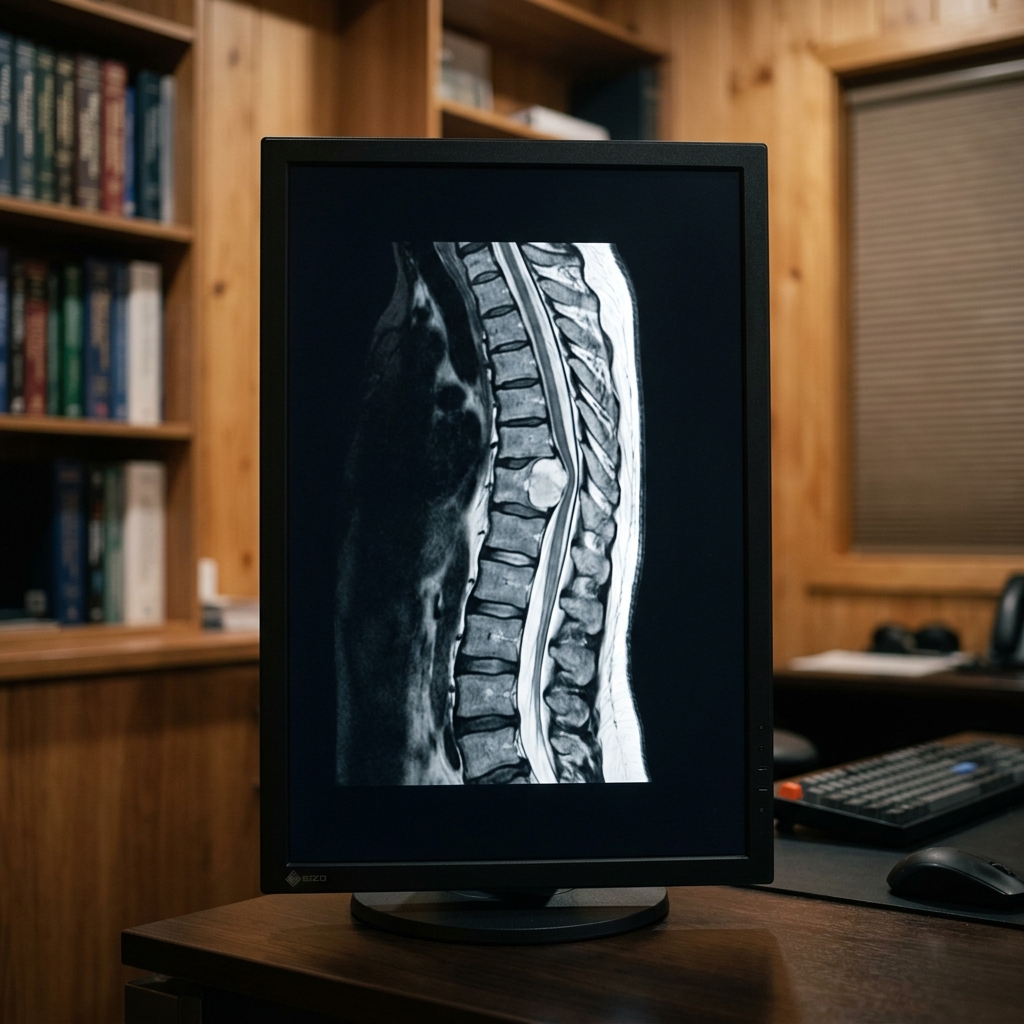 Typical diagnostic grey-scale imaging scan (MRI/CT).
 Non-surgical treatment options
- Radiation therapy for radiosensitive tumours and palliative treatment of metastatic disease.
- Chemotherapy depending on tumour type.
- Corticosteroids to reduce swelling and inflammation around the tumour.
- Pain management.
- Observation with serial imaging for slow-growing benign tumours.
When surgery may be considered
Surgery is considered for tumours causing neurological compromise, spinal instability, or significant pain not controlled by other means. The goals include decompression of the spinal cord, tumour removal or debulking, and spinal stabilisation.
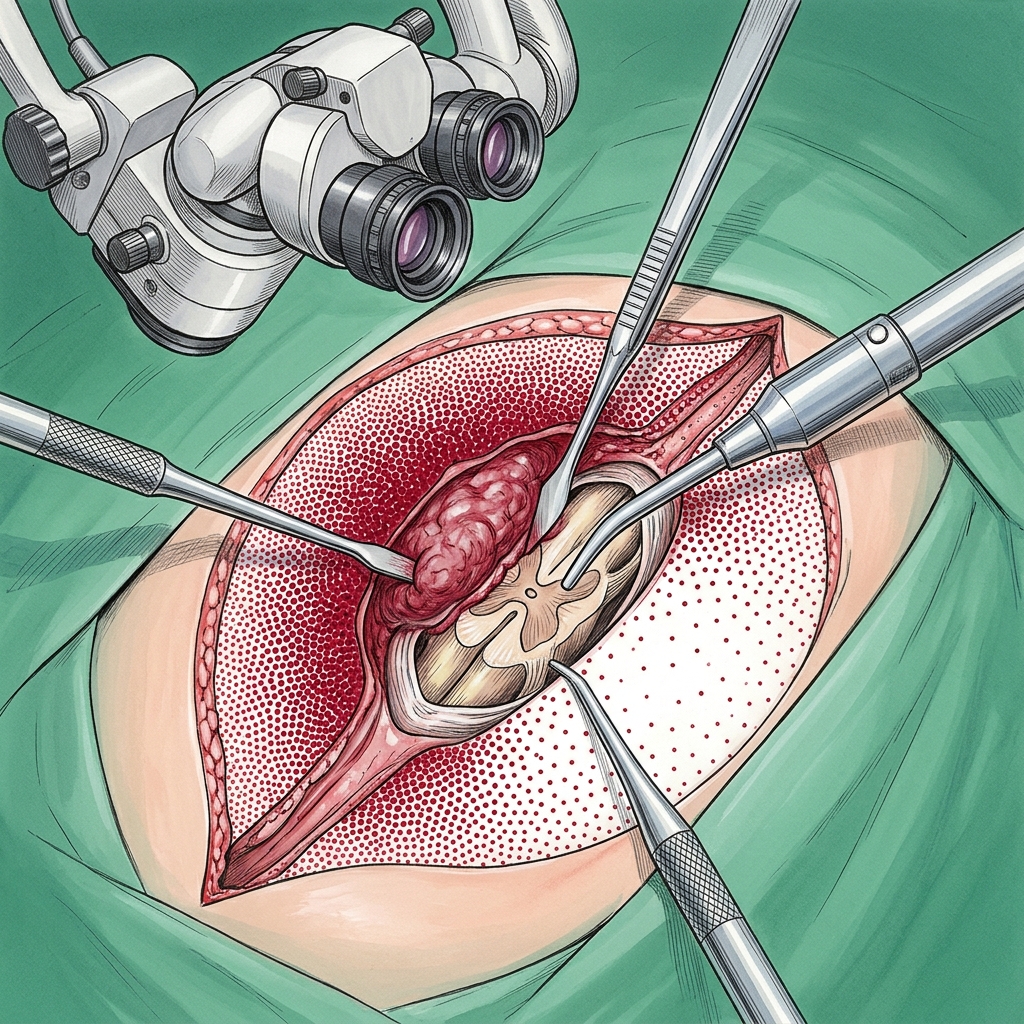 Advanced surgical technology and precision instrumentation.
 Expected outcomes
Outcomes depend on the tumour type, location, and the patient's overall health. Many benign primary tumours can be completely removed with excellent long-term results. For metastatic disease, surgery aims to preserve quality of life and neurological function.
 Rehabilitation pathways and safe movement restoration.
 Frequently asked questions
Are all spinal tumours cancerous?
No. Many spinal tumours are benign (non-cancerous), such as meningiomas and schwannomas. These can often be surgically removed with excellent outcomes. Metastatic tumours that have spread from cancer elsewhere are malignant.