Brain Tumour
A brain tumour is an abnormal growth of cells within the brain or surrounding structures. Brain tumours can be benign (non-cancerous) or malignant (cancerous) and vary widely in their behaviour, treatment, and prognosis. Accurate diagnosis and expert management are essential.

Symptoms
- Persistent or worsening headaches, often worse in the morning or with straining.
- New-onset seizures or changes in seizure pattern.
- Progressive weakness, numbness, or coordination problems.
- Vision changes, speech difficulty, or cognitive changes.
- Personality or behavioural changes.
- Nausea and vomiting, particularly in the morning.
- Balance and gait disturbance.
 Clinical anatomical model showing affected spinal structures (no text).
 Causes and risk factors
- The exact cause of most brain tumours is unknown.
- Previous radiation exposure to the head.
- Genetic conditions such as neurofibromatosis, tuberous sclerosis, or Li-Fraumeni syndrome.
- Family history of brain tumours (in some cases).
- Metastatic spread from cancers elsewhere in the body (lung, breast, melanoma, kidney, bowel).
How diagnosis is made
- MRI with contrast is the primary investigation for brain tumours.
- CT scan for initial assessment, particularly in emergency presentations.
- MR spectroscopy and perfusion imaging to characterise the tumour.
- Biopsy or surgical excision for definitive tissue diagnosis.
- Staging investigations if metastatic disease is suspected.
 Typical diagnostic grey-scale imaging scan (MRI/CT).
 Non-surgical treatment options
- Observation with serial imaging for small, incidental, slow-growing tumours.
- Corticosteroids to reduce brain swelling around the tumour.
- Anti-seizure medications for tumour-related epilepsy.
- Radiation therapy (stereotactic radiosurgery, whole-brain radiotherapy).
- Chemotherapy for specific tumour types.
- Multidisciplinary team management including oncology, radiation oncology, and neurology.
When surgery may be considered
Surgery is considered for tumours that are accessible, causing symptoms, or growing. The goals of surgery include establishing a tissue diagnosis, reducing tumour volume, relieving pressure on the brain, and in some cases achieving complete removal. The approach is tailored to the tumour type and location.
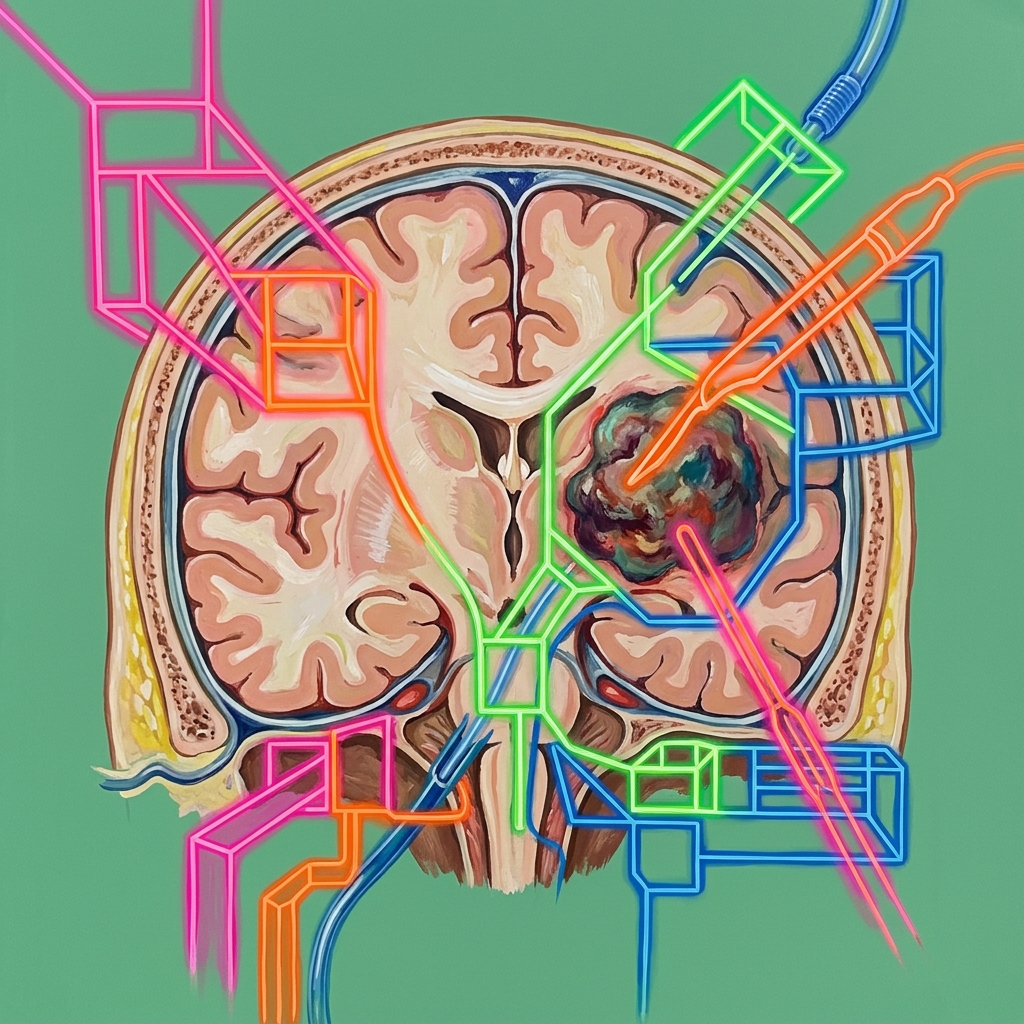 Advanced surgical technology and precision instrumentation.
 Expected outcomes
Outcomes vary widely depending on the tumour type, grade, location, and extent of removal. Many benign tumours can be cured with complete surgical removal. For malignant tumours, treatment aims to maximise survival and quality of life through a combination of surgery, radiotherapy, and chemotherapy.
 Rehabilitation pathways and safe movement restoration.
 Frequently asked questions
Are all brain tumours cancerous?
No. Many brain tumours are benign, meaning they are non-cancerous and grow slowly. Common benign tumours include meningiomas and schwannomas. However, even benign tumours can cause significant symptoms due to their location and size.
What are the survival rates for brain tumours?
Survival rates vary enormously depending on the tumour type and grade. Many benign tumours are curable with surgery. For malignant tumours, advances in surgery, radiotherapy, and chemotherapy continue to improve outcomes.