Glioblastoma
Glioblastoma (GBM) is the most common and aggressive type of primary malignant brain tumour. Characterised by rapid cell growth and infiltration into surrounding brain tissue, GBM requires comprehensive, multi-modal treatment including surgical resection, radiation therapy, and chemotherapy.

Symptoms
- Persistent, progressive headaches that are often worse in the morning.
- New-onset seizures or changes in seizure patterns.
- Gradual neurological deficits such as weakness, numbness, or loss of balance.
- Speech difficulties, cognitive changes, or memory loss.
- Changes in personality, mood, or behaviour.
- Visual disturbances or double vision.
 Clinical anatomical model showing affected spinal structures (no text).
 Causes and risk factors
- The exact causes of glioblastoma remain largely unknown.
- Previous high-dose radiation exposure to the head is a rare risk factor.
- Genetic predisposition in rare hereditary syndromes (such as Li-Fraumeni).
- Occurs most commonly in older adults between 45 and 70 years.
How diagnosis is made
- High-resolution MRI of the brain with contrast to identify the characteristic ring-enhancing mass.
- Surgical biopsy or resection to obtain tissue for histopathology and molecular testing (such as MGMT promoter methylation status).
- CT scan of the head in emergency presentations.
 Typical diagnostic grey-scale imaging scan (MRI/CT).
 Non-surgical treatment options
- Corticosteroid therapy (dexamethasone) to reduce brain swelling and pressure.
- Radiation therapy combined with temozolomide chemotherapy (Stupp protocol).
- Anti-seizure medications to prevent or control seizures.
- Tumour Treating Fields (TTFields) therapy in selected cases.
- Palliative care for symptom support and quality of life.
When surgery may be considered
Surgical resection is recommended as the vital first step for almost all accessible glioblastomas. The objective is maximal safe resection (removing as much tumour as possible without causing permanent neurological damage) to relieve pressure and obtain a tissue diagnosis.
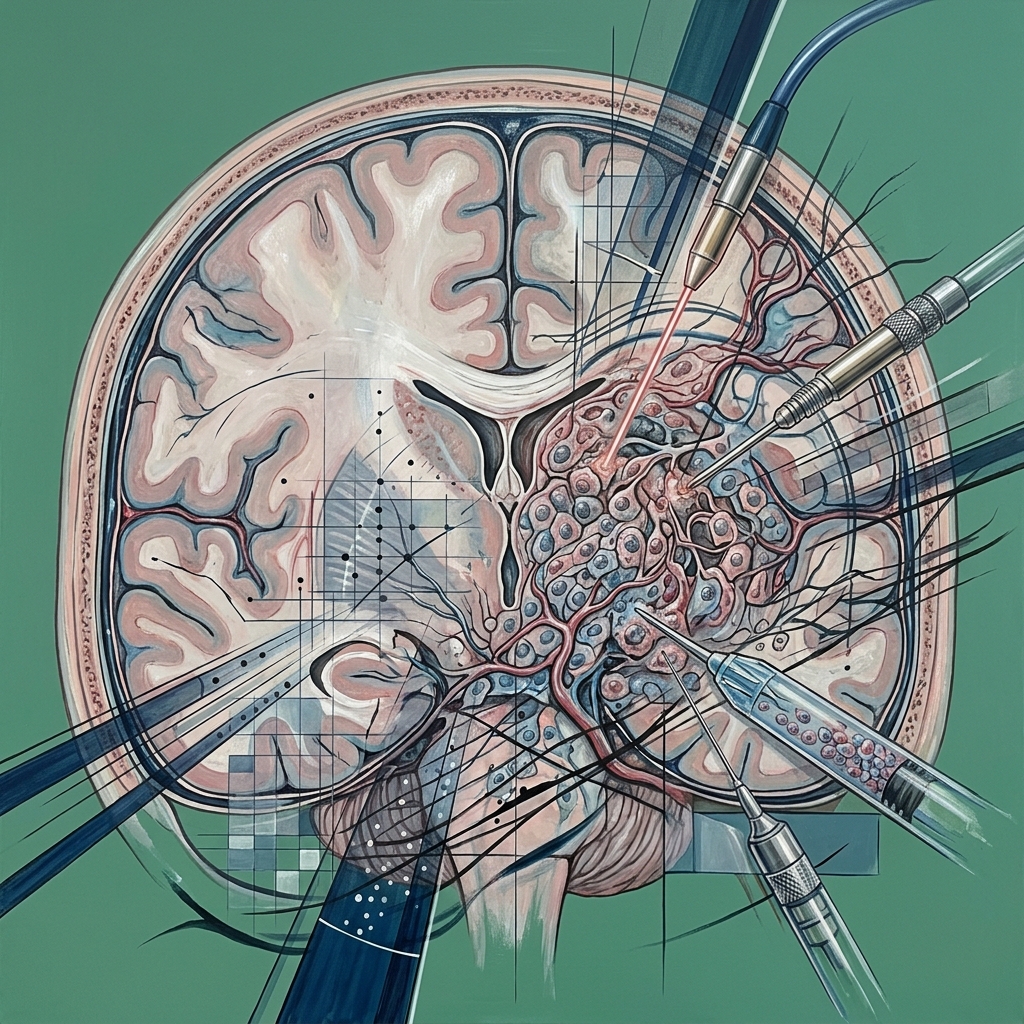 Advanced surgical technology and precision instrumentation.
 Expected outcomes
Glioblastoma is a complex, aggressive cancer. Modern treatment combinations have significantly improved median survival and quality of life. Early maximal safe resection followed by structured oncology treatments provides the best possible therapeutic outcome.
 Rehabilitation pathways and safe movement restoration.
 Frequently asked questions
What is the Stupp protocol?
The Stupp protocol is the global standard of care for glioblastoma. It consists of surgical resection followed by six weeks of daily radiotherapy combined with temozolomide chemotherapy, followed by six monthly cycles of temozolomide alone.