Adjacent Segment Disease
Adjacent Segment Disease (ASD) refers to degenerative changes that develop in the spinal levels immediately above or below a previous spinal fusion. By locking a segment of the spine, fusion surgery alters regional biomechanics, transferring increased stress and motion to the neighbouring segments and accelerating wear.

Symptoms
- New or returning lower back or neck pain years after a successful fusion surgery.
- Radiating pain, numbness, or weakness in the arms or legs from adjacent nerve compression.
- Reduced flexibility and range of motion in the spine.
- Stiffness and muscle spasm above or below the previous surgical site.
- Pain that worsens with standing, walking, or lifting.
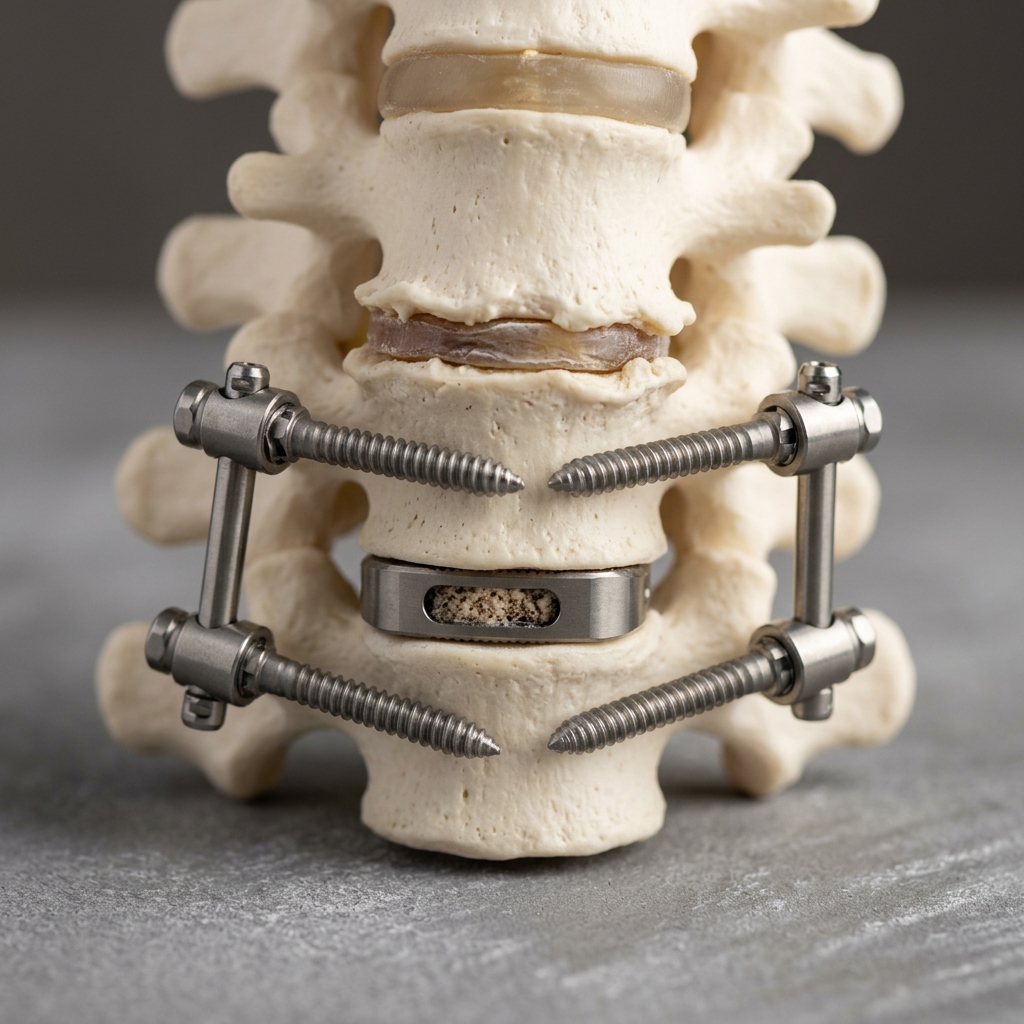 Clinical anatomical model showing affected spinal structures (no text).
 Causes and risk factors
- Altered biomechanical load and increased mobility at segments adjacent to a fused level.
- Natural age-related spinal degeneration occurring alongside the biomechanical stress.
- Pre-existing mild degeneration at the adjacent level prior to the original fusion.
- Patient-related factors such as poor bone density, smoking, or obesity.
How diagnosis is made
- Comprehensive clinical history tracing the original fusion and new symptoms.
- MRI of the spine to assess nerve or spinal cord compression at adjacent levels.
- CT scan to evaluate the integrity of the previous fusion and facet joints.
- Standing X-rays to assess spinal alignment and dynamic motion.
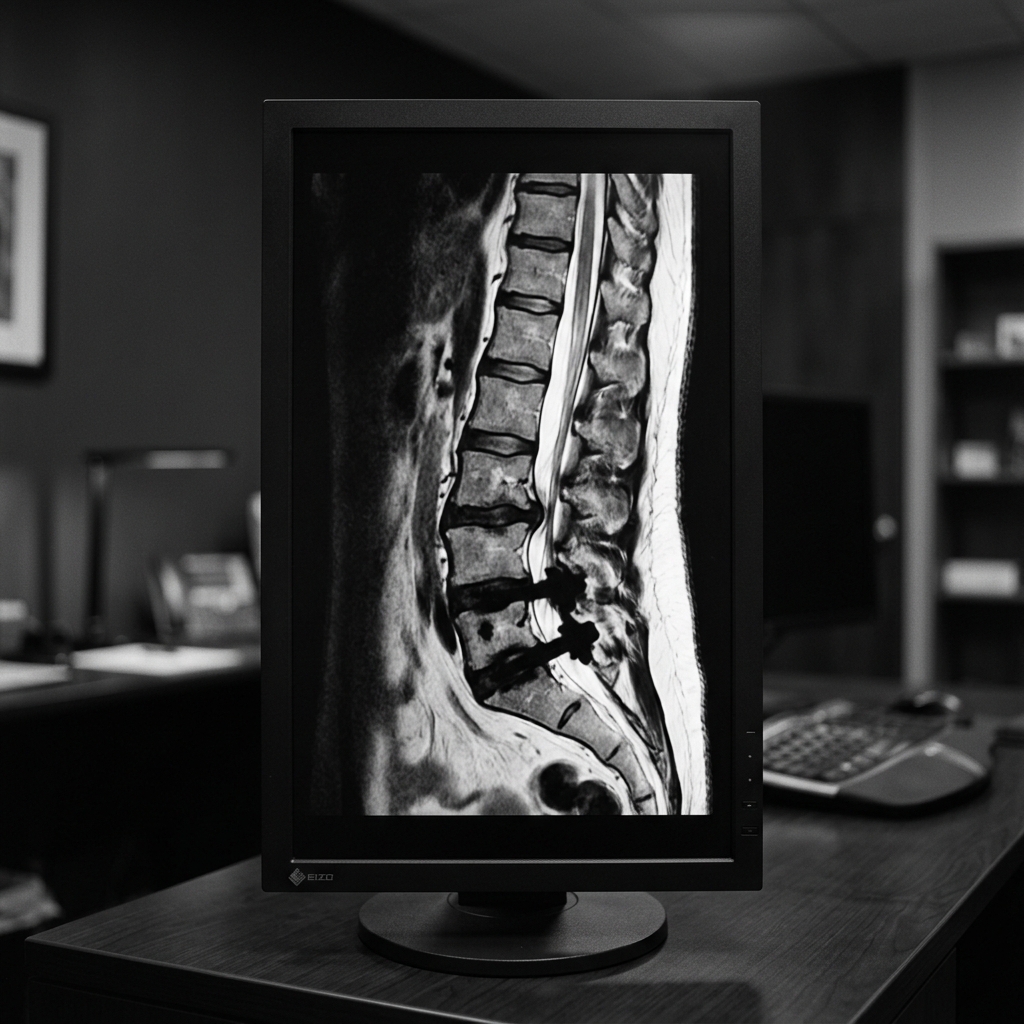 Typical diagnostic grey-scale imaging scan (MRI/CT).
 Non-surgical treatment options
- Structured physical therapy focusing on core strength, posture, and biomechanics.
- Epidural steroid injections or facet blocks at the adjacent segment to manage pain.
- Oral anti-inflammatory and neuropathic pain medications.
- Ergonomic modifications and weight management.
- Smoking cessation to prevent further accelerated wear.
When surgery may be considered
Revision surgery is considered when adjacent segment degeneration leads to severe nerve compression, spinal cord compression (myelopathy), or structural instability that has failed conservative treatment. Surgery involves extending the decompression or fusion.
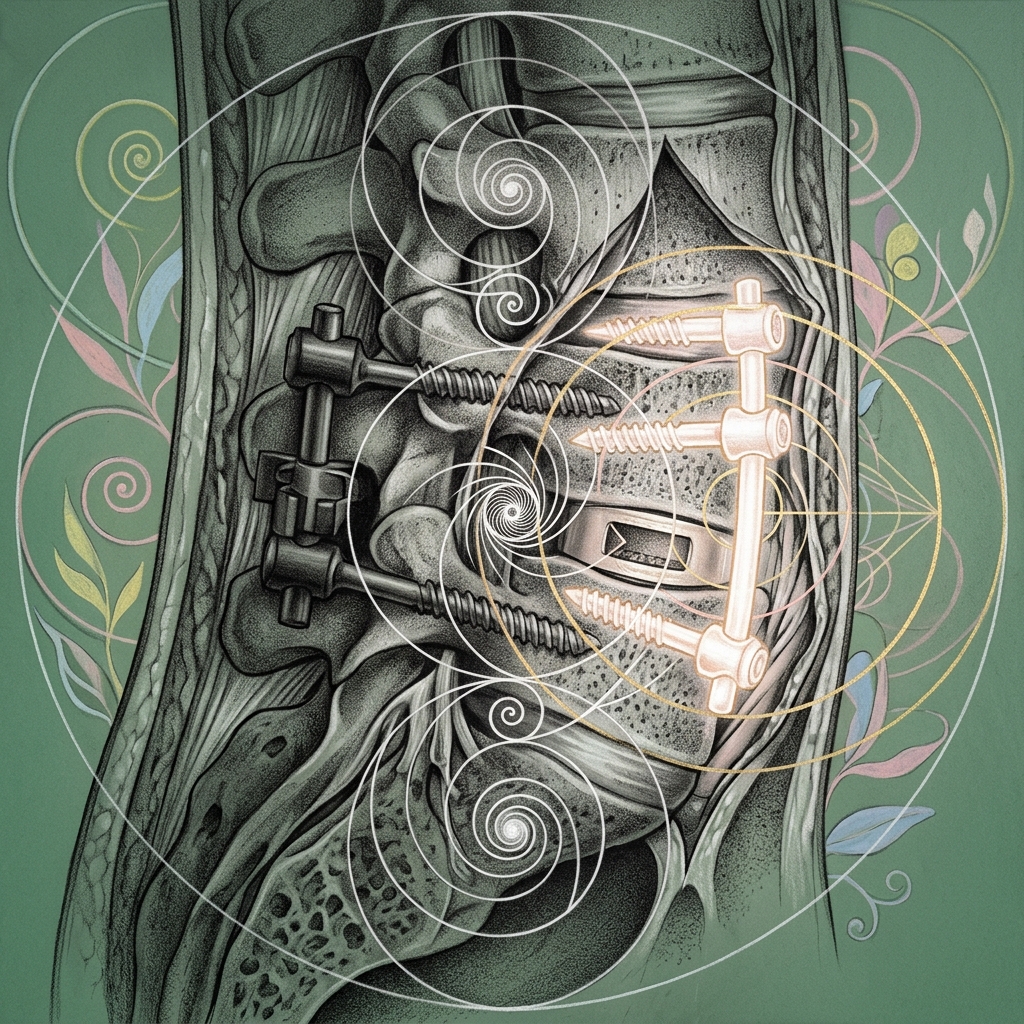 Advanced surgical technology and precision instrumentation.
 Expected outcomes
Surgical revision is highly effective in relieving radiating nerve pain and restoring function. Dr Aliashkevich utilises minimally invasive techniques to preserve motion where possible and protect surrounding tissues from further wear.
 Rehabilitation pathways and safe movement restoration.
 Frequently asked questions
How common is adjacent segment disease?
Degenerative changes at adjacent segments are common on imaging over time. However, only a subset of patients develop actual symptoms requiring treatment, with about 10% to 15% requiring a revision surgery within 10 years.