Cauda Equina Syndrome
Cauda equina syndrome is a surgical emergency caused by severe compression of the nerve roots in the lower spinal canal. It can cause loss of bladder and bowel control, numbness in the groin area, and leg weakness. Urgent surgical decompression is required to prevent permanent damage.

Symptoms
- Difficulty urinating or loss of sensation when passing urine.
- Loss of bowel control or altered bowel function.
- Numbness or altered sensation in the groin, inner thighs, and buttocks (saddle anaesthesia).
- Severe low back pain, often with bilateral leg pain.
- Weakness in one or both legs.
- Sexual dysfunction.
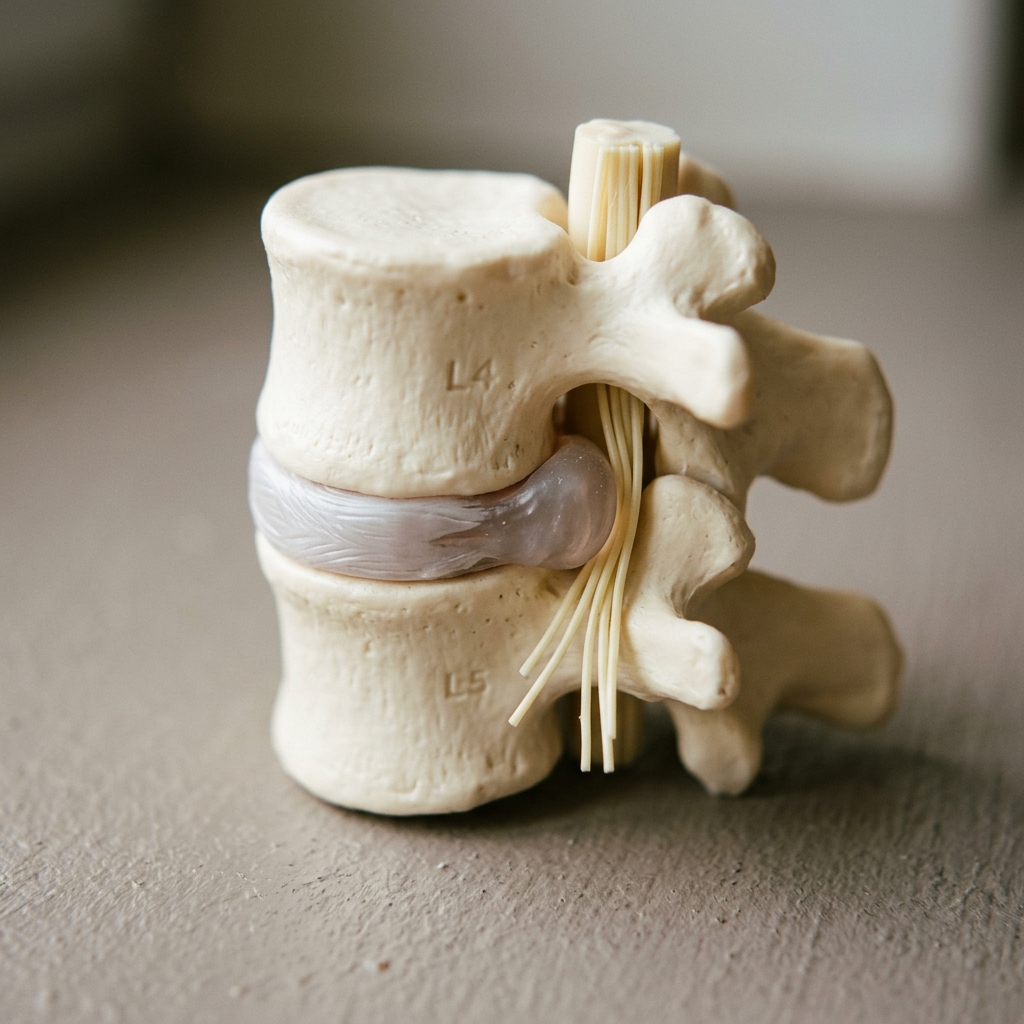 Clinical anatomical model showing affected spinal structures (no text).
 Causes and risk factors
- Large central lumbar disc herniation compressing multiple nerve roots.
- Spinal canal narrowing from severe stenosis.
- Spinal tumour compressing the cauda equina.
- Spinal epidural abscess or haematoma.
- Trauma or fracture causing acute canal compression.
- Post-surgical complications (rare).
How diagnosis is made
- Urgent clinical assessment of bladder function, perineal sensation, and lower limb neurology.
- Emergency MRI scan of the lumbar spine to confirm compression and identify the cause.
- Post-void residual bladder volume measurement.
- CT scan if MRI is not immediately available.
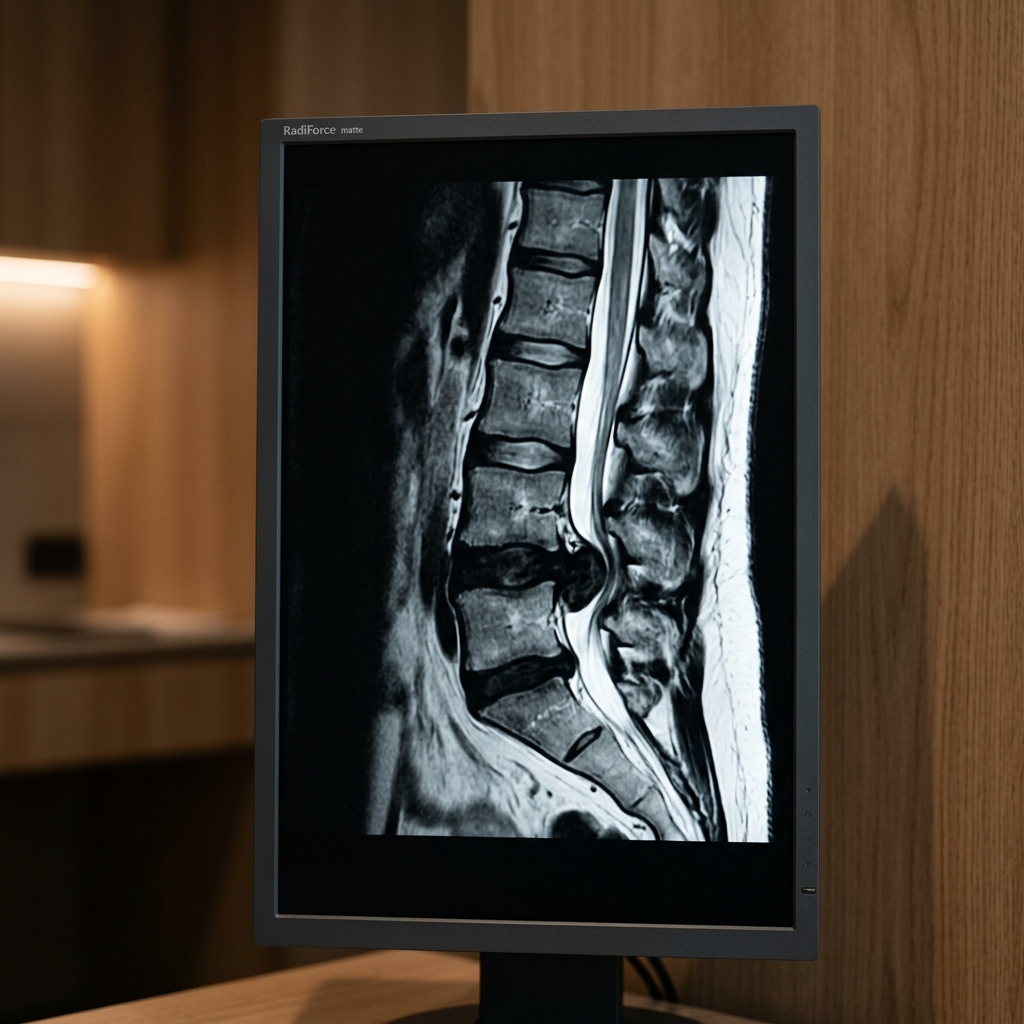 Typical diagnostic grey-scale imaging scan (MRI/CT).
 Non-surgical treatment options
- There is no effective non-surgical treatment for established cauda equina syndrome.
- Emergency surgical decompression is the standard of care.
- Post-operative rehabilitation addresses any residual neurological deficit.
When surgery may be considered
Surgery is performed on an emergency basis as soon as the diagnosis is confirmed. Decompressive surgery (typically a laminectomy and discectomy) aims to relieve pressure on the nerve roots as quickly as possible. Earlier surgery is associated with better outcomes.
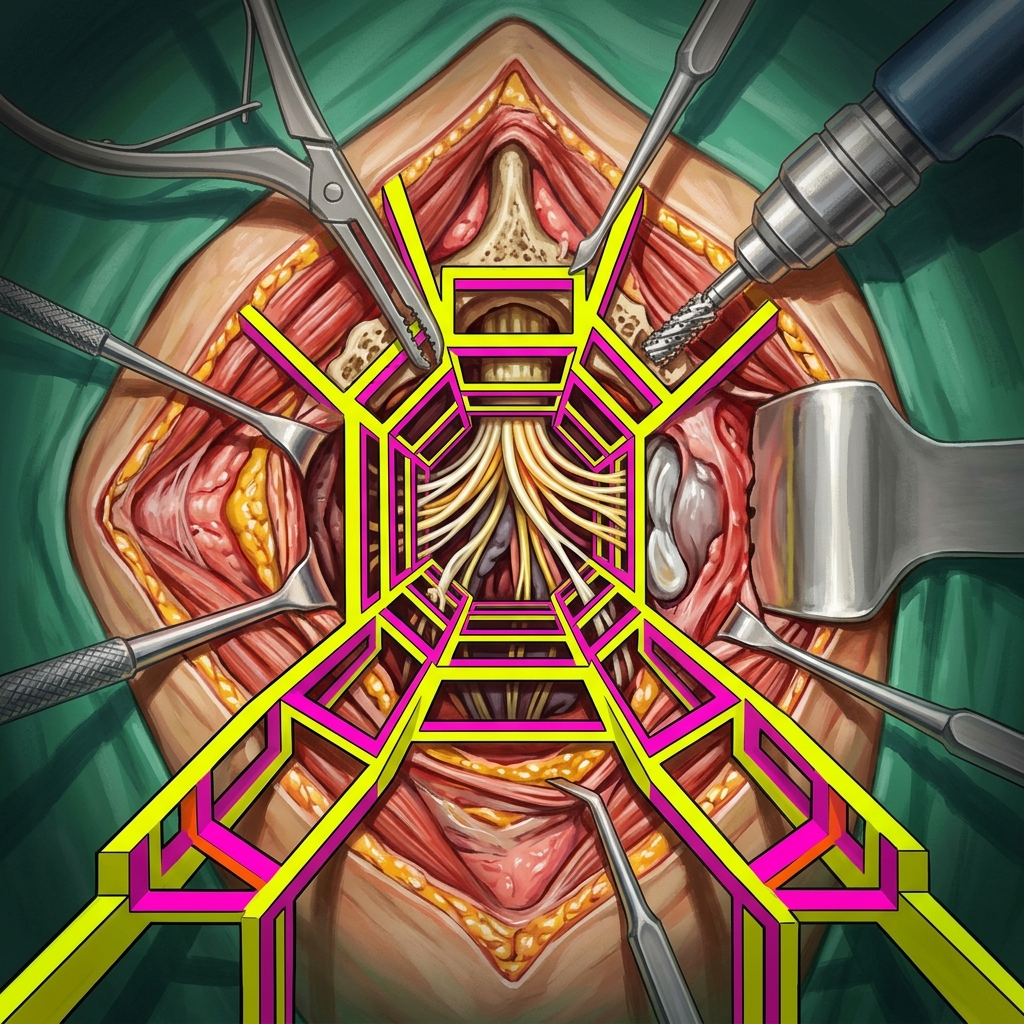 Advanced surgical technology and precision instrumentation.
 Expected outcomes
Outcomes depend on the severity of nerve compression and the time from symptom onset to surgery. Patients who undergo surgery within 24 to 48 hours of symptom onset have the best chance of recovery. Some patients experience full recovery while others may have residual bladder, bowel, or sexual dysfunction.
 Rehabilitation pathways and safe movement restoration.
 Frequently asked questions
How quickly does cauda equina syndrome need to be treated?
Cauda equina syndrome requires emergency surgical treatment, ideally within 24 to 48 hours of symptom onset. If you suspect this condition, attend your nearest emergency department immediately.
Can you fully recover from cauda equina syndrome?
Recovery varies. Early surgical decompression provides the best chance of full recovery. Some patients recover completely, while others may have residual bladder, bowel, or sensory changes depending on the severity and duration of compression.