Cervical Myelopathy
Cervical myelopathy is compression of the spinal cord in the neck region. It is a serious condition that can cause progressive loss of hand dexterity, balance problems, and walking difficulty. Early recognition and treatment are important to prevent irreversible neurological damage.

Symptoms
- Difficulty with fine motor tasks such as buttoning a shirt, writing, or handling coins.
- Clumsy, stiff hands with a feeling of numbness or "thick fingers".
- Unsteady gait and balance problems, feeling unsteady on the feet.
- Neck stiffness and pain, though pain may be absent in some patients.
- Weakness in the arms or legs.
- Urinary urgency or frequency in advanced cases.
- Electric shock sensation running down the spine when bending the neck forward (Lhermitte sign).
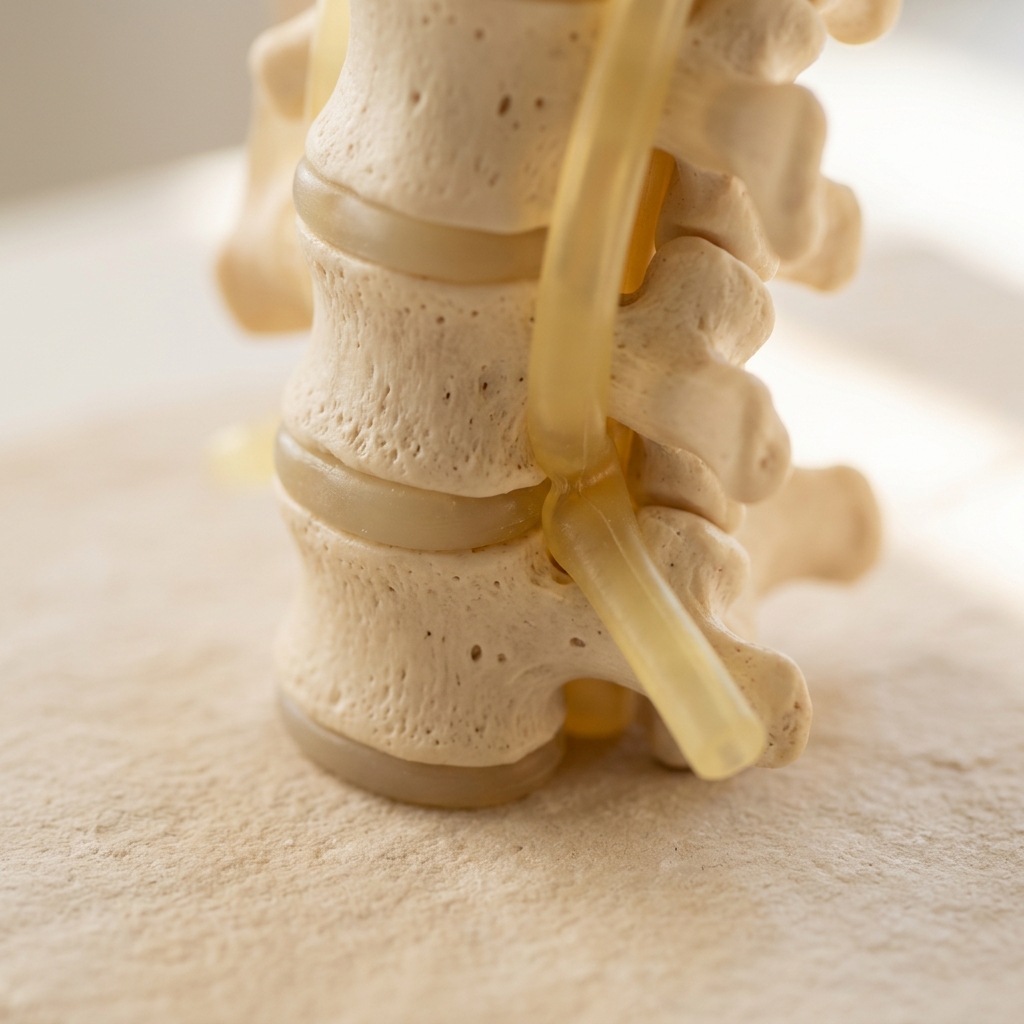 Clinical anatomical model showing affected spinal structures (no text).
 Causes and risk factors
- Degenerative cervical spondylosis causing disc bulging and bone spur formation.
- Thickening of the ligamentum flavum or posterior longitudinal ligament (OPLL).
- Congenital cervical canal narrowing predisposing to cord compression.
- Cervical disc herniation with cord compression.
- Spondylolisthesis or instability at the cervical level.
How diagnosis is made
- Detailed neurological examination of hand dexterity, gait, reflexes (typically hyperactive), and sensation.
- MRI of the cervical spine showing spinal cord compression and cord signal change.
- CT scan for assessment of bony anatomy and calcified ligaments.
- Dynamic (flexion-extension) X-rays to assess spinal stability.
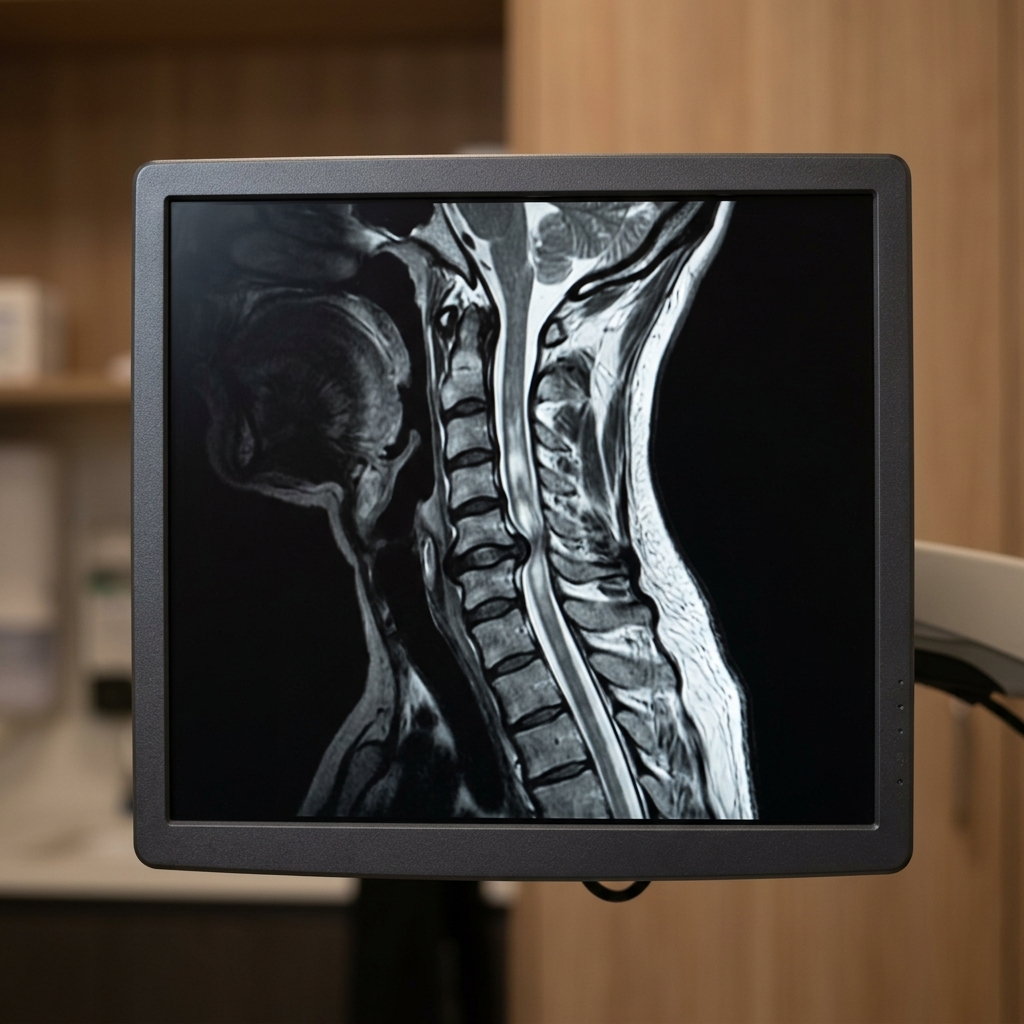 Typical diagnostic grey-scale imaging scan (MRI/CT).
 Non-surgical treatment options
- Close monitoring with serial clinical examinations for mild, stable cases.
- Avoidance of high-risk activities such as contact sports and trampolining.
- Cervical collar use is not routinely recommended but may provide temporary comfort.
- Physiotherapy to maintain strength and mobility within safe limits.
When surgery may be considered
Surgery is recommended for most patients with established cervical myelopathy, as the condition tends to progress without treatment. The goal of surgery is to halt progression and allow maximal neurological recovery. Approaches include anterior cervical discectomy and fusion, disc replacement, laminoplasty, or posterior decompression and fusion depending on the anatomy.
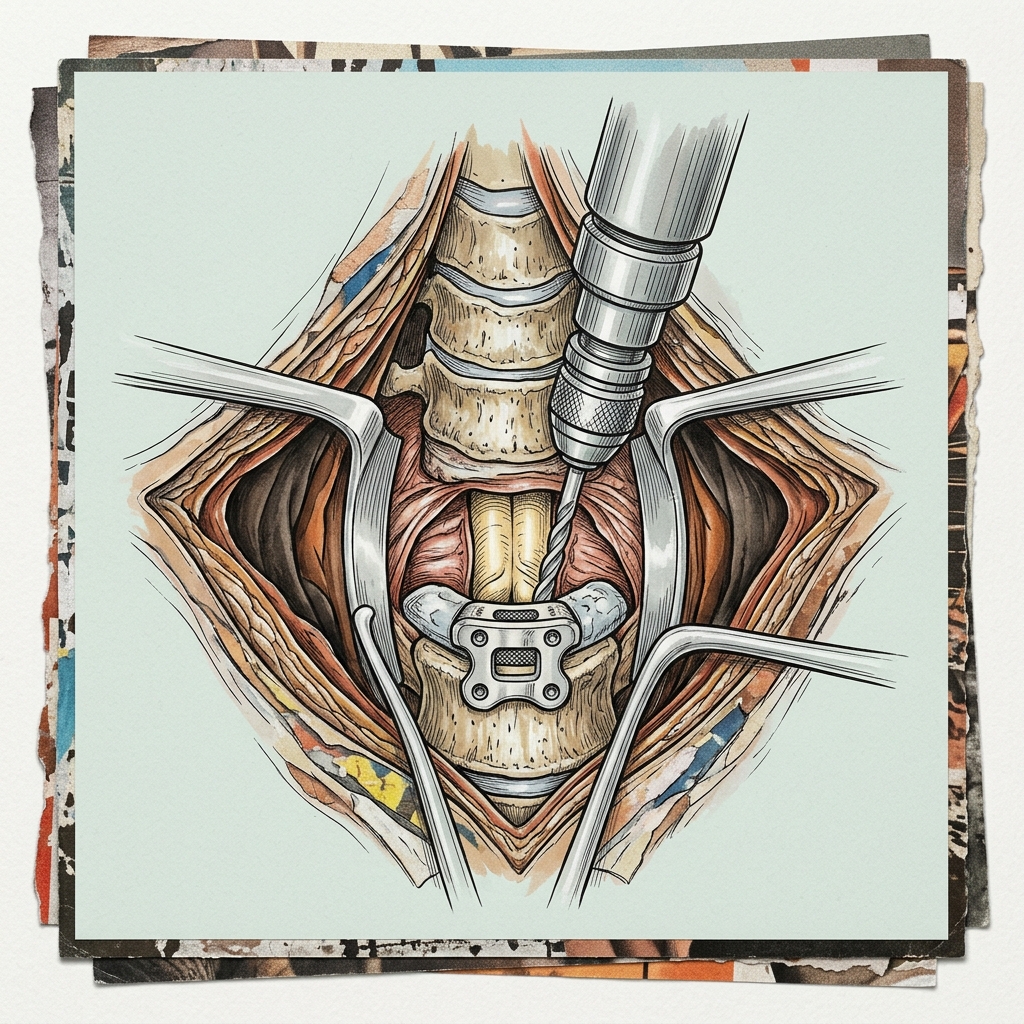 Advanced surgical technology and precision instrumentation.
 Expected outcomes
Surgical decompression halts progression in the vast majority of patients. Neurological recovery depends on the severity and duration of cord compression before surgery. Early intervention typically achieves better outcomes. Most patients experience meaningful improvement in hand function and walking stability.
 Rehabilitation pathways and safe movement restoration.
 Frequently asked questions
Can cervical myelopathy be reversed?
Surgery can halt progression and allow partial recovery, but the degree of improvement depends on how long and how severely the spinal cord has been compressed. This is why early diagnosis and treatment are important.
What happens if cervical myelopathy is not treated?
Without treatment, cervical myelopathy typically worsens over time, leading to increasing difficulty with hand function, balance, and walking. In severe cases, it can result in significant disability.