Cervical Disc Replacement
Cervical Disc Replacement (CDR), also known as artificial disc replacement, is a state-of-the-art surgical procedure performed to treat severe nerve or spinal cord compression in the neck. Instead of fusing the vertebrae together after removing the damaged disc, the surgeon inserts a highly advanced, movable artificial joint. This removes the pain while maintaining normal neck mobility and protecting adjacent discs.
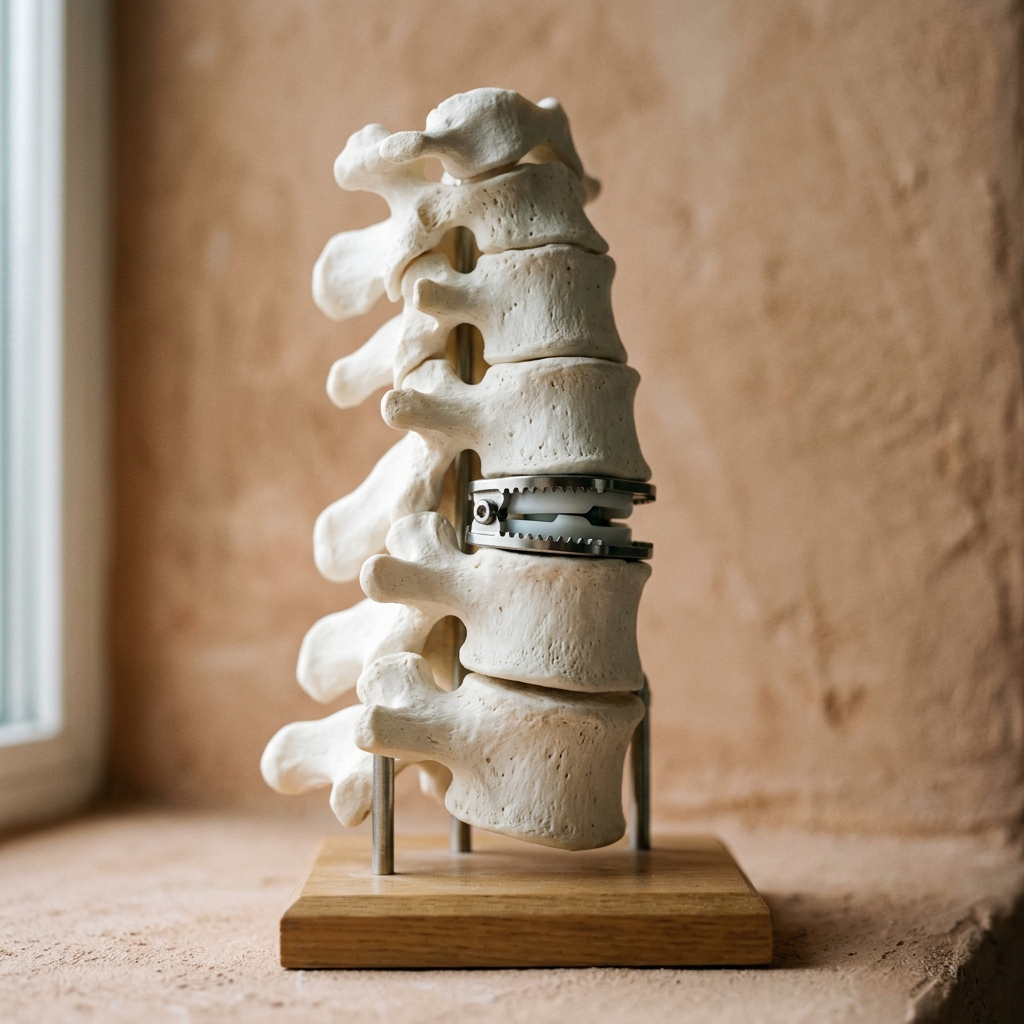
When this procedure may be recommended
- Cervical radiculopathy or myelopathy caused by a herniated disc or bony spurs.
- Severe arm pain, numbness, or weakness that does not respond to physical therapy or injections.
- Multi-level cervical disease where motion preservation is crucial.
- Lack of severe facet joint arthritis at the affected level.
Who may be a candidate
Candidates must have cervical nerve compression at one or two levels with relatively intact facet joints and no severe osteoporosis. Preserving neck mobility is especially beneficial in younger, active patients to prevent adjacent segment disease.
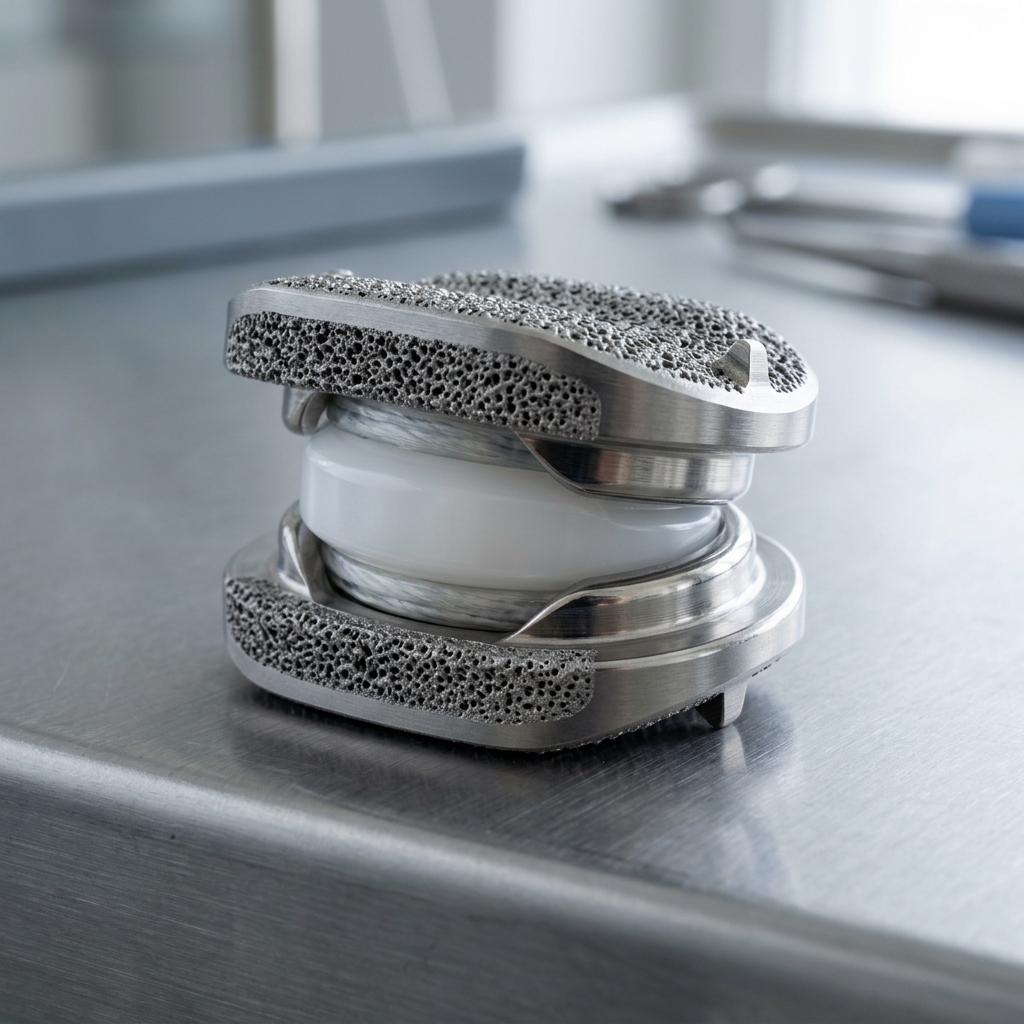 Advanced medical implant technology (no text).
 Alternatives to surgery
- Anterior Cervical Discectomy and Fusion (ACDF) — the traditional fusion option.
- Structured neck rehabilitation, postural correction, and physical therapy.
- Cervical epidural steroid injections or selective nerve root blocks.
What to expect
- Access: A small horizontal skin fold incision is made in the front of the neck (anterior approach), providing a direct path to the spine.
- Discectomy: The damaged disc is entirely removed, and bony spurs are cleared to fully decompress the nerves.
- Implant Sizing: Trial implants are used under X-ray guidance to determine the exact size and fit for the artificial disc.
- Device Insertion: The artificial disc (comprising titanium plates and a surgical polymer core) is securely positioned.
- Verification: Proper alignment and mobility are verified via intraoperative imaging prior to closing.
Technology and imaging
Utilises advanced motion-preserving implants (such as the Mobi-C or ProDisc-C), high-definition microscopes, and real-time fluoroscopy for precise positioning.
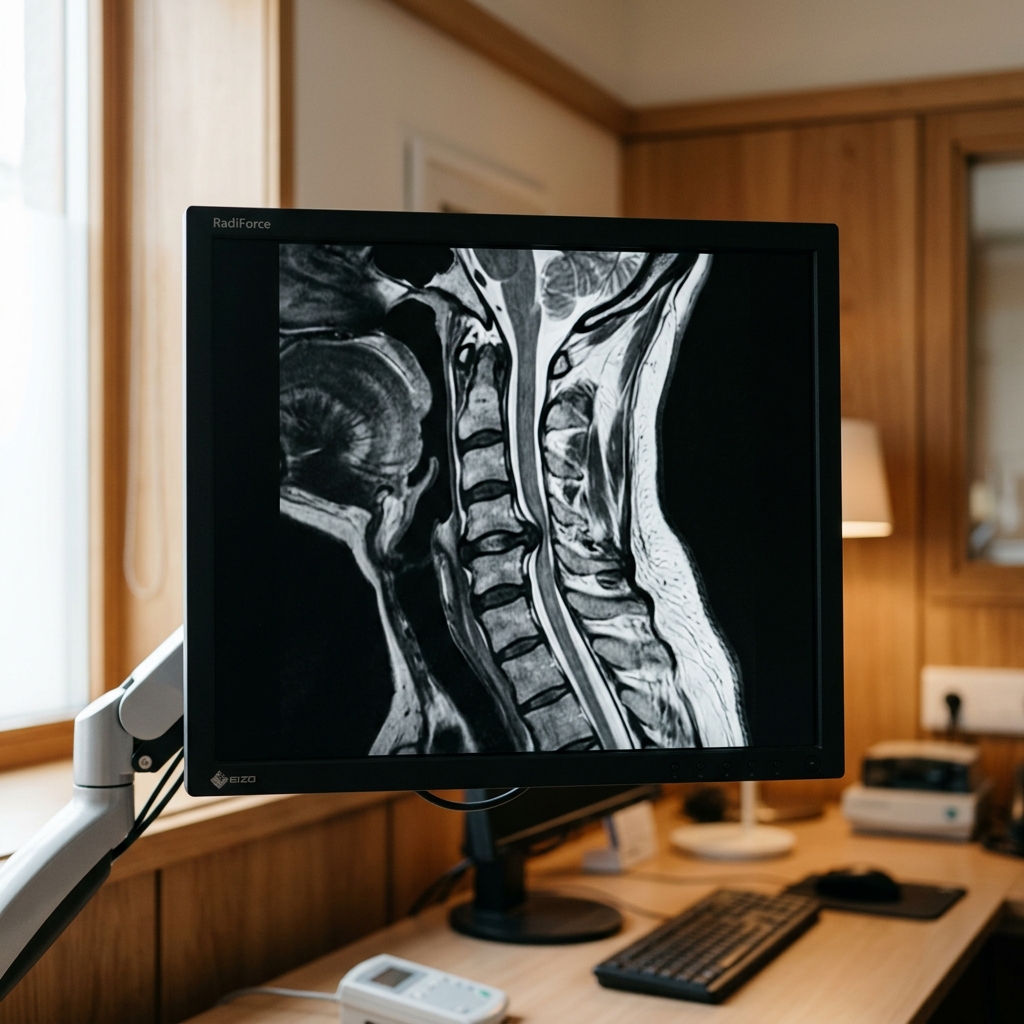 High-precision diagnostic imaging visualization.
 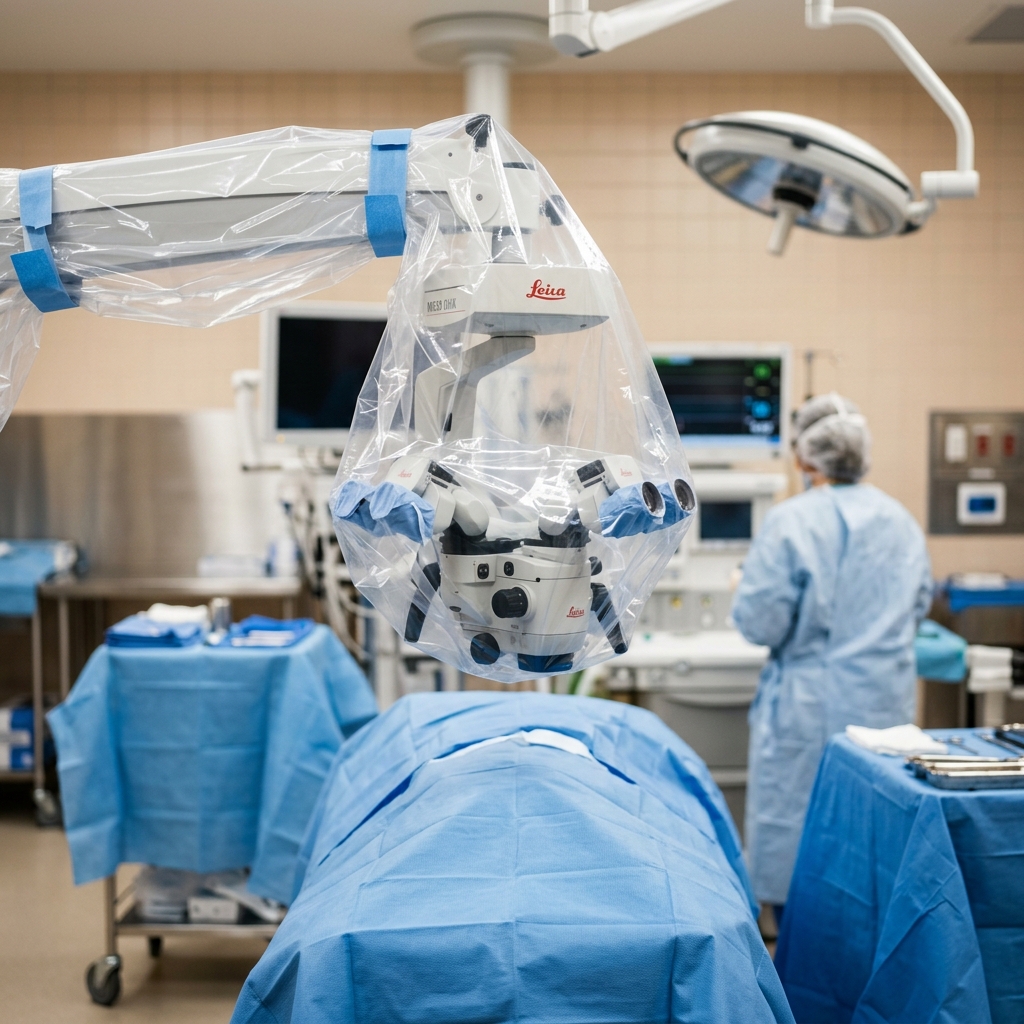 Clinical Zeiss/Leica operating microscope setup.
 Hospital stay
Usually 1 night, allowing close observation before discharge.
Recovery milestones
- Day 1: Patient is mobilised, swallowing is assessed, and neck soreness is managed.
- Weeks 1-2: Gentle movement, walking, and early return to light daily tasks. Soft collar is rarely needed.
- Weeks 2-6: Gradual increase in neck range of motion. Light desk work can resume.
- Weeks 6+: Return to full physical therapy, neck strengthening, and normal active lifestyle.
 Post-operative mobilization and recovery milestones.
 Risks and complications
- Implant migration or subsidence (very low risk, under 1%).
- Temporary swallowing difficulty (dysphagia) or hoarseness (usually resolves in weeks).
- Heterotopic ossification (bony growth restricting implant movement over time).
- Nerve or spinal cord injury (extremely rare).
Frequently asked questions
How long does a cervical artificial disc last?
Clinical trials and long-term data show that modern cervical artificial discs are highly durable, designed to last several decades without significant wear.
Will I need a neck collar after surgery?
Because the artificial disc is stable immediately upon insertion and no fusion is required, a hard neck collar is almost never necessary, allowing early natural movement.