Sciatica
Sciatica is pain that radiates along the path of the sciatic nerve, which runs from the lower back through the buttock and down the back of the leg. It is usually caused by compression of a lumbar nerve root, most commonly from a herniated disc or spinal stenosis.

Symptoms
- Sharp, burning, or shooting pain radiating from the lower back through the buttock and down the back of one leg.
- Pain that worsens with sitting, coughing, or straining.
- Numbness or tingling in the leg, foot, or toes.
- Weakness in the affected leg, such as difficulty lifting the foot (foot drop).
- Pain typically affects one side of the body.
- In severe cases, difficulty controlling bladder or bowel function (seek urgent care immediately).
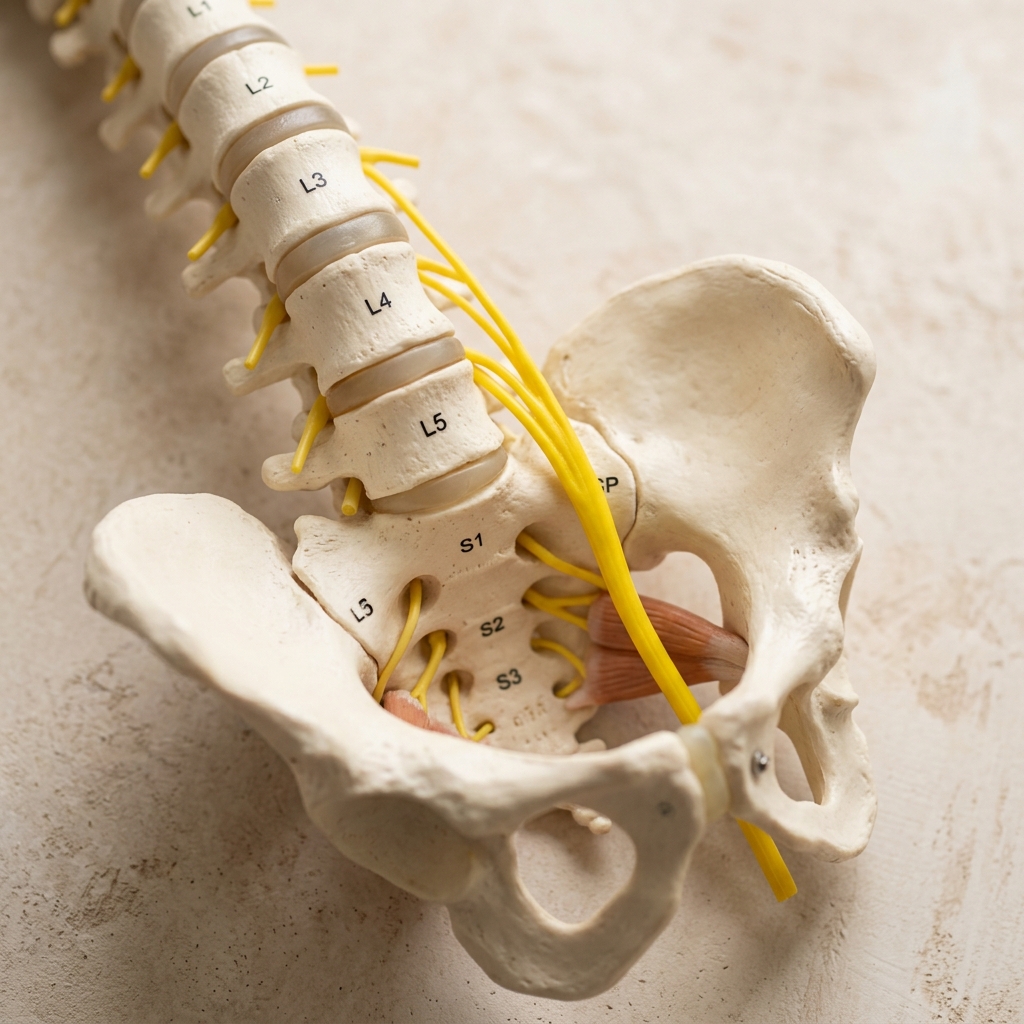 Clinical anatomical model showing affected spinal structures (no text).
 Causes and risk factors
- Herniated or bulging lumbar disc compressing the L4, L5, or S1 nerve root.
- Lumbar spinal stenosis narrowing the space around the nerve roots.
- Degenerative spondylolisthesis causing nerve root compression.
- Piriformis syndrome where the piriformis muscle irritates the sciatic nerve.
- Bone spurs or osteophytes encroaching on the neural foramen.
- Rarely, tumours or infections affecting the lumbar spine.
How diagnosis is made
- Clinical examination including straight leg raise test, reflexes, strength, and sensation assessment.
- MRI scan of the lumbar spine to identify the source and level of nerve compression.
- CT scan when MRI is contraindicated or additional bony detail is needed.
- Nerve conduction studies in complex or atypical presentations.
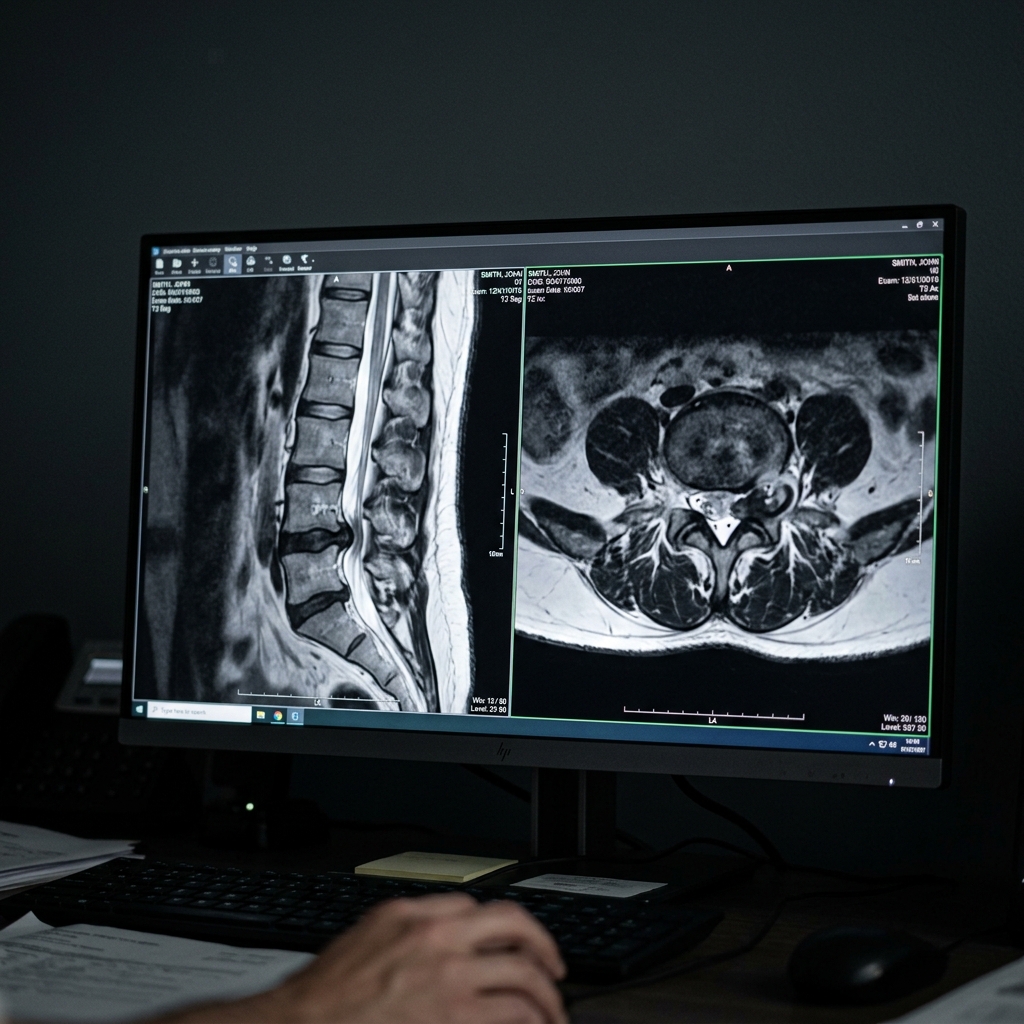 Typical diagnostic grey-scale imaging scan (MRI/CT).
 Non-surgical treatment options
- Short period of relative rest followed by gradual return to normal activities.
- Physiotherapy with nerve mobilisation techniques, core strengthening, and stretching.
- Anti-inflammatory medications, paracetamol, and neuropathic pain agents such as pregabalin.
- Epidural or transforaminal corticosteroid injections for significant nerve inflammation.
- Most episodes of sciatica resolve within 6 to 12 weeks with conservative management.
When surgery may be considered
Surgery may be recommended when severe sciatica persists despite 6 to 12 weeks of conservative treatment, or earlier if there is significant or progressive neurological deficit such as foot drop. Microdiscectomy is the most common surgical option and provides rapid relief from leg pain.
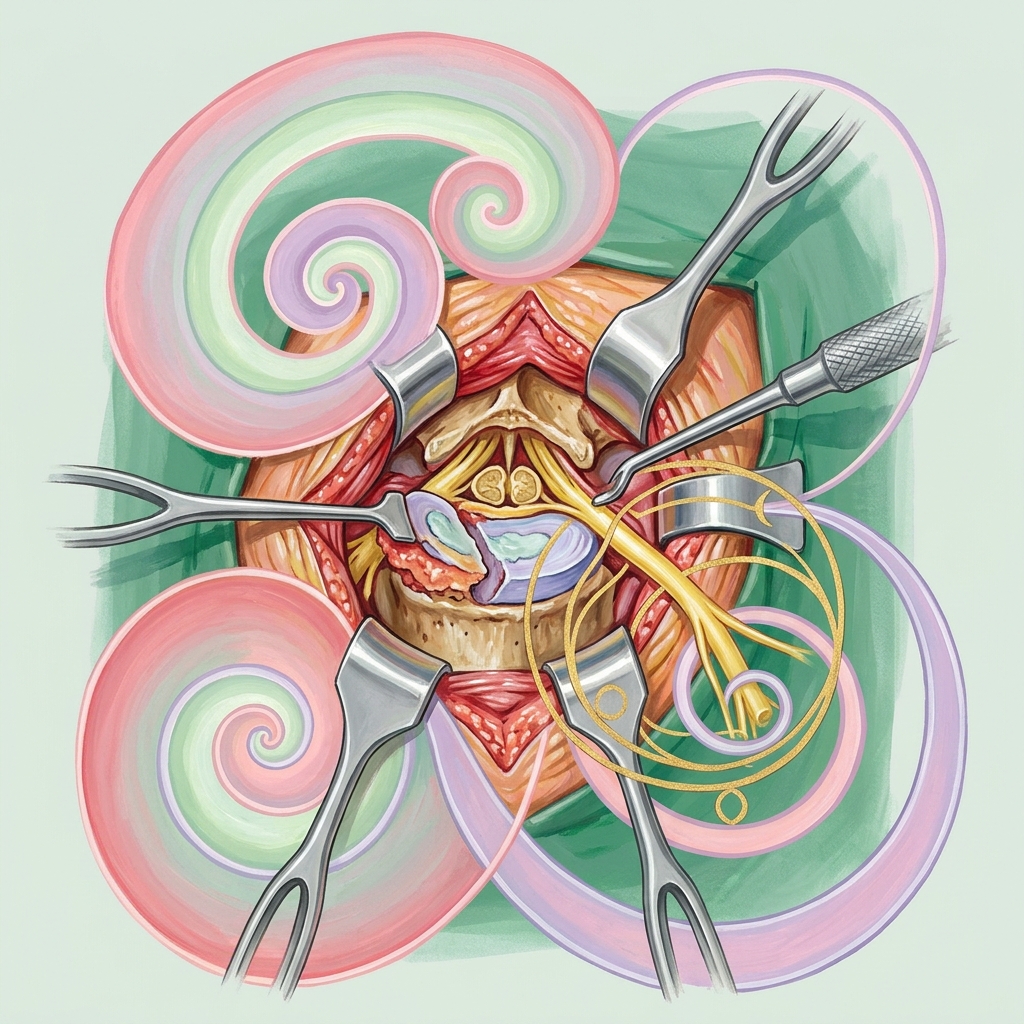 Advanced surgical technology and precision instrumentation.
 Expected outcomes
Surgical treatment of sciatica caused by disc herniation has a success rate exceeding 90% for leg pain relief. Most patients experience significant improvement within days of surgery. Long-term outcomes are excellent for the majority of patients.
 Rehabilitation pathways and safe movement restoration.
 Frequently asked questions
How long does sciatica last?
Most episodes of sciatica improve significantly within 6 to 12 weeks with conservative treatment. However, some cases persist longer and may benefit from further investigation and targeted treatment.
Is walking good for sciatica?
Gentle walking is generally recommended for sciatica as it promotes blood flow and prevents deconditioning. Prolonged bed rest is discouraged. Your physiotherapist can guide appropriate activity levels.
When should I see a specialist for sciatica?
You should see a specialist if your sciatica does not improve after 6 weeks of conservative treatment, if you develop new weakness in your leg, or if you experience any bladder or bowel changes.