Degenerative Disc Disease
Degenerative disc disease refers to age-related changes in the spinal discs that can cause chronic back or neck pain. Despite the name, it is a natural process of ageing rather than a progressive disease, though it can significantly affect quality of life in some people.

Symptoms
- Chronic, aching pain in the lower back or neck that may fluctuate in intensity.
- Pain that worsens with sitting, bending, lifting, or twisting.
- Pain that improves with movement, walking, or changing position frequently.
- Intermittent episodes of more severe pain lasting days to weeks.
- Stiffness, particularly in the morning or after prolonged inactivity.
- Occasional radiating pain into the arms or legs if associated disc bulging compresses a nerve.
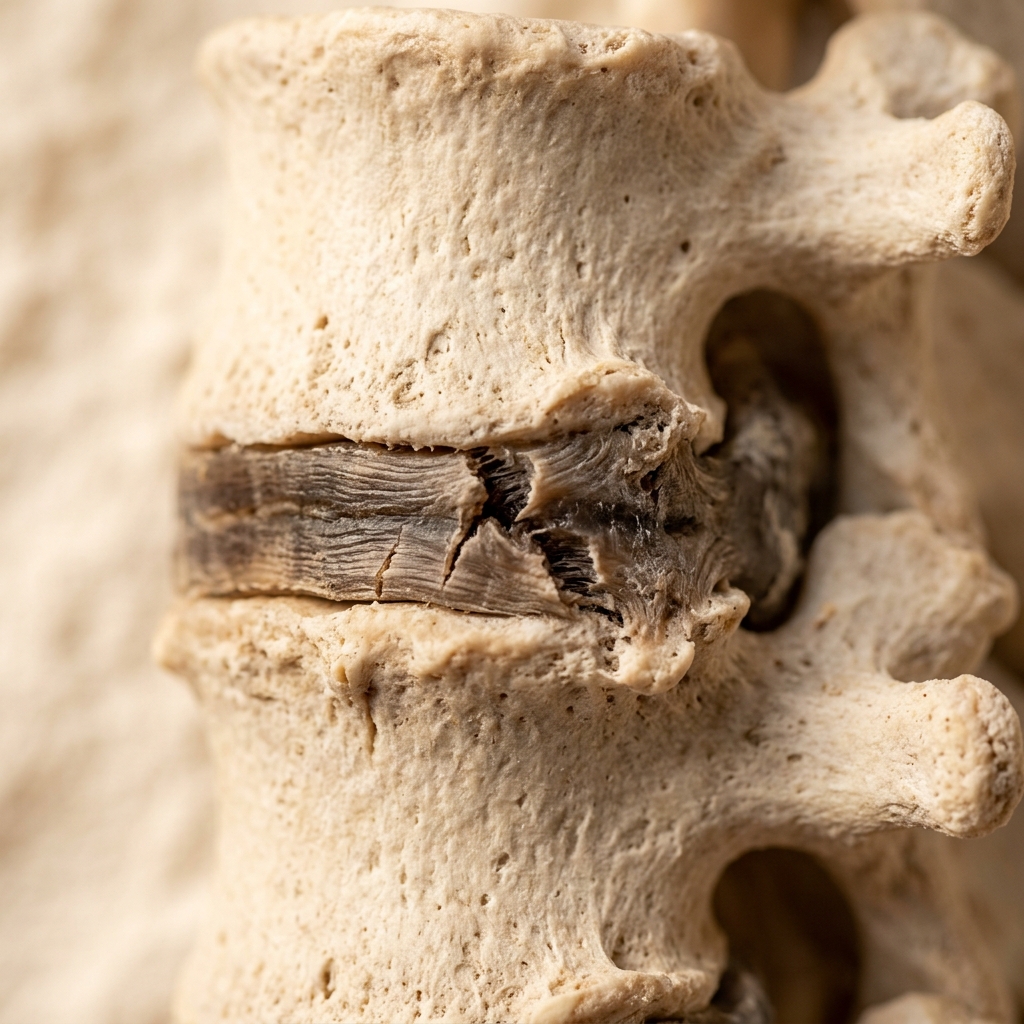 Clinical anatomical model showing affected spinal structures (no text).
 Causes and risk factors
- Loss of water content in the discs with ageing, reducing their cushioning ability.
- Micro-tears in the annulus (outer disc wall) causing pain and gradual disc collapse.
- Genetic factors influencing the rate and severity of disc degeneration.
- Repetitive loading through occupation, sport, or body weight.
- Smoking, which impairs disc nutrition through reduced blood flow.
- Previous disc injury or surgery.
How diagnosis is made
- Clinical assessment of pain patterns, mobility, and neurological function.
- MRI scan showing disc dehydration (dark disc), disc height loss, and annular tears.
- X-rays to assess disc space narrowing and alignment.
- CT scan for additional bony detail when surgical planning is required.
- Provocative discography (rarely, in specific surgical planning scenarios).
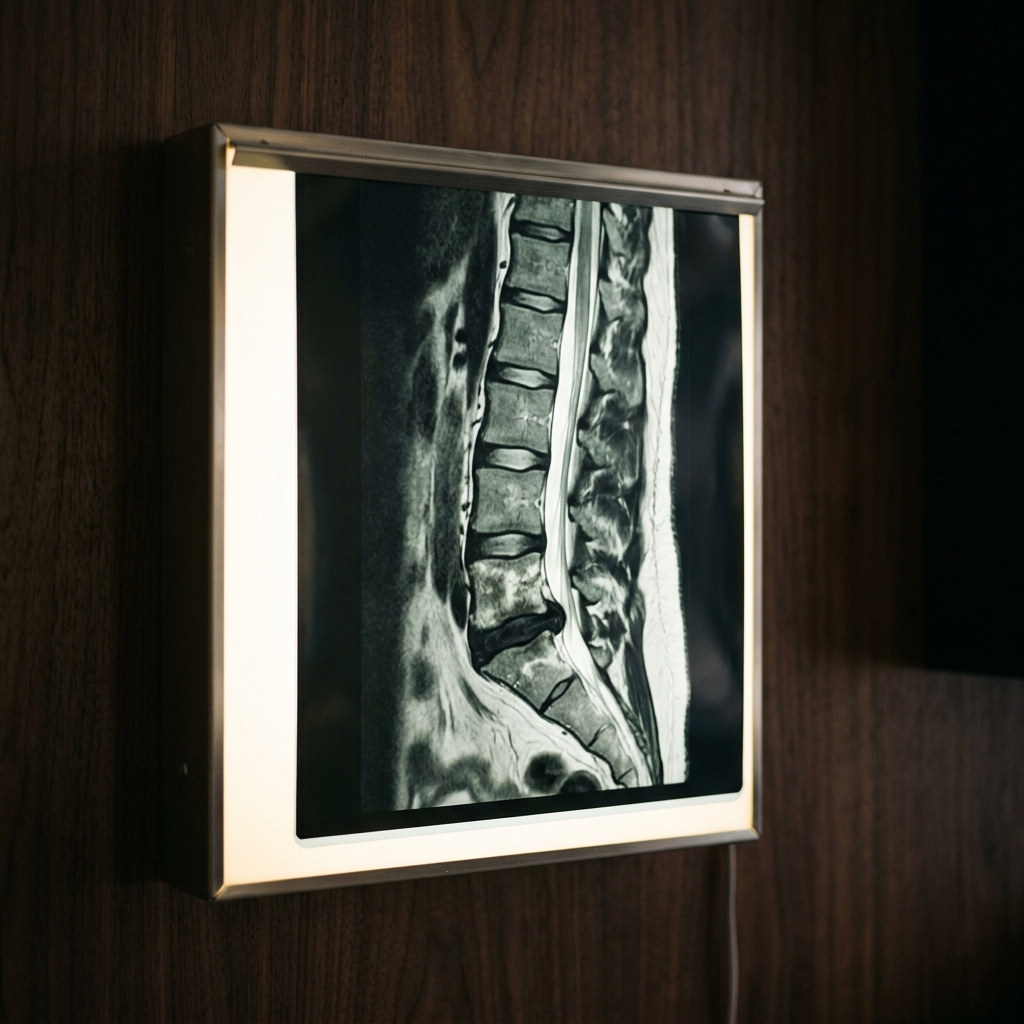 Typical diagnostic grey-scale imaging scan (MRI/CT).
 Non-surgical treatment options
- Structured physiotherapy programme focusing on core stabilisation and flexibility.
- Regular exercise including walking, swimming, and low-impact aerobic activity.
- Weight management to reduce mechanical loading on the spine.
- Pain management with anti-inflammatory medications and heat or cold therapy.
- Ergonomic modifications for desk work, driving, and daily activities.
- Smoking cessation to improve disc nutrition.
When surgery may be considered
Surgery for degenerative disc disease is considered only when significant symptoms persist despite comprehensive conservative management. Options include disc replacement (to preserve motion) or fusion (to eliminate motion at the painful segment). Careful patient selection is critical for good surgical outcomes.
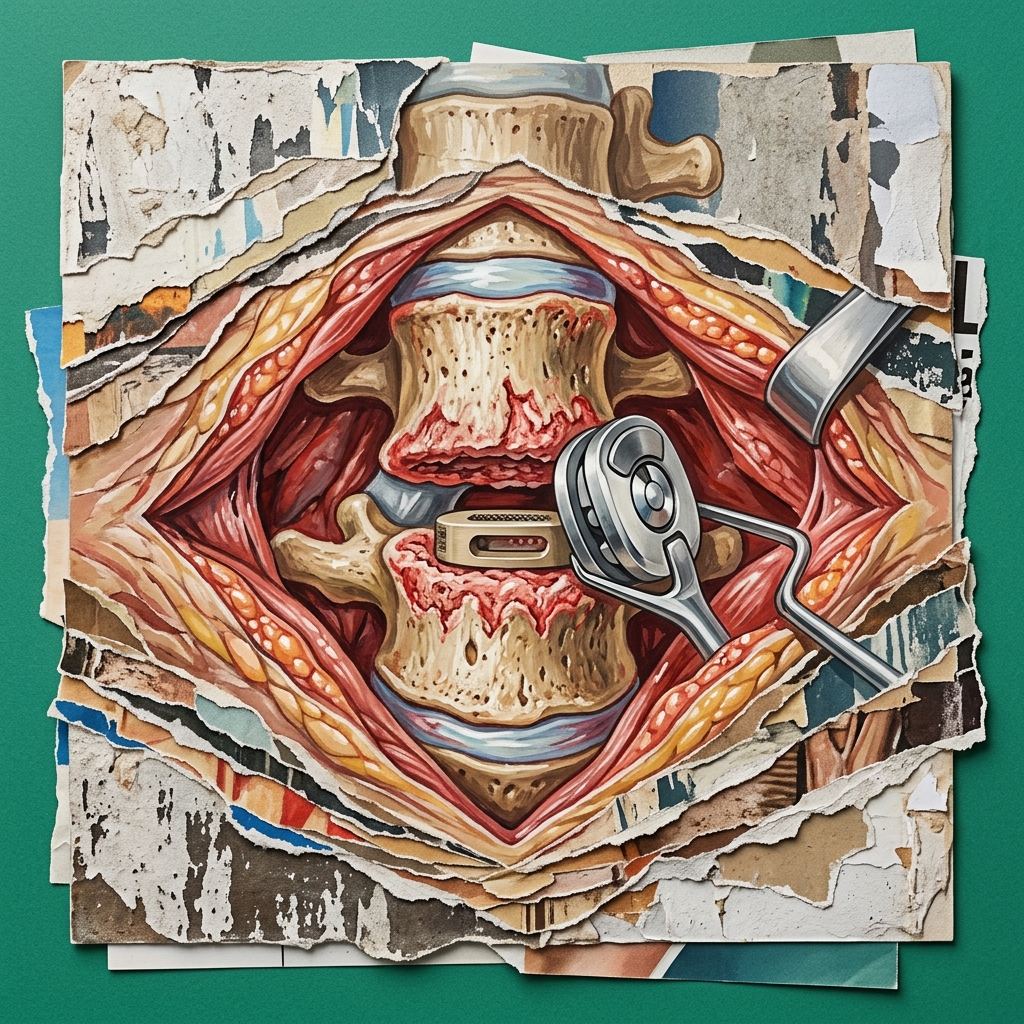 Advanced surgical technology and precision instrumentation.
 Expected outcomes
Most patients with degenerative disc disease manage well with conservative treatment. When surgery is carefully indicated, disc replacement and fusion both achieve good long-term pain reduction in appropriately selected patients.
 Rehabilitation pathways and safe movement restoration.
 Frequently asked questions
Is degenerative disc disease a serious condition?
It is a common age-related change and not a progressive disease in the traditional sense. While it can cause significant pain, it is manageable in most cases and does not inevitably worsen.
Can disc degeneration be reversed?
The structural changes of disc degeneration cannot be reversed. However, symptoms can be effectively managed and quality of life maintained through appropriate treatment including exercise, physiotherapy, and when necessary, surgery.